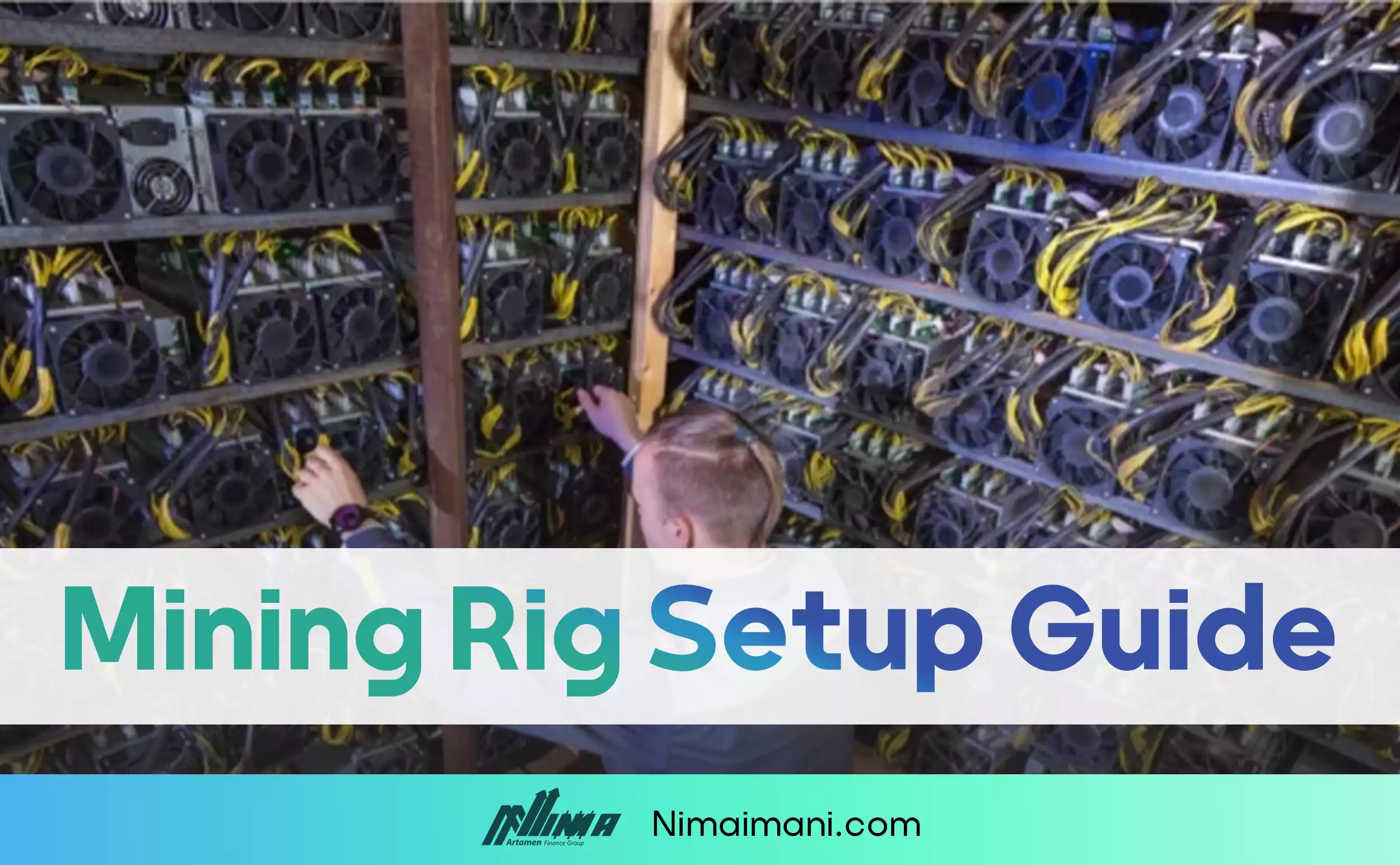
Mining Rig Setup Guide: From 0 to Starting Cryptocurrency Mining
Cryptocurrency mining is one of the foundational pillars of blockchain technology—a process without which networks like Bitcoin and early Ethereum (1.0) would lose functionality. Among various mining tools, the mining rig plays a crucial role as a specialized system designed for professional crypto mining.
But what exactly is a mining rig, and why has it become a popular choice among mining enthusiasts? Building a mining rig requires basic knowledge about costs, selecting the right components, and even assembling a custom DIY version.
This guide provides a comprehensive breakdown of mining rigs, their core components, setup steps, and how to begin mining, helping you enter the world of cryptocurrency mining with clarity and confidence.
You can follow the latest finance updates on Nima Imani’s website.
Table of Contents
- What Is a Mining Rig?
- How Does a Mining Rig Work?
- The Mining Process and Solving Algorithms
- Connecting a Mining Rig to Blockchain Networks and Processing Transactions
- The Role of Hash Rate and Energy Consumption in Rig Performance
- Types of Mining Rigs
- Core Components of a Mining Rig
- Which Cryptocurrencies Are Suitable for Mining Rigs?
- How to Build a Mining Rig
- Selecting and Preparing the Equipment
- Key Optimization Tips for Mining Rigs
- Profitability of Mining Rigs
- Advantages of Mining Rigs
- Disadvantages and Challenges of Mining Rigs
- The Future of Mining Rigs
- Expected Hardware and Mining Technology Evolution
- Effects of Price Changes and Regulations on Mining
- FAQ
- Conclusion
What Is a Mining Rig?
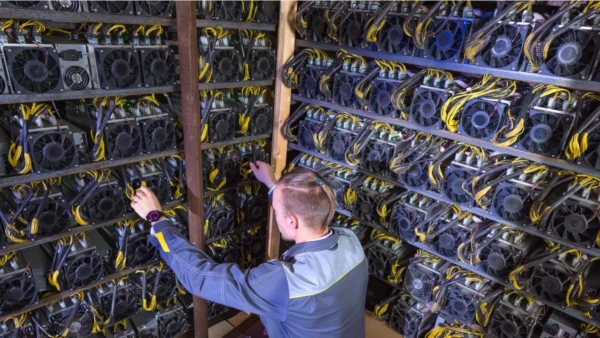
A Mining Rig is a powerful hardware system designed to perform complex computational tasks required by blockchain networks that rely on the Proof‑of‑Work (PoW) algorithm—such as Bitcoin and Ethereum 1.0.
By performing these calculations, a mining rig contributes to securing and validating the blockchain network.
Cryptocurrency mining is the process through which computer hardware performs intensive computations to help maintain the security of blockchain networks. Mining rigs serve as specialized equipment in this field, providing the computational power necessary for PoW‑based systems.
Every mining rig is built to achieve high processing capability, known as Hash Rate.
Hash rate indicates how quickly a device can solve cryptographic algorithms and is typically measured in hashes per second (H/s).
A higher hash rate means a greater chance of solving a block and receiving the mining reward.
Alongside hash rate, energy consumption is another major factor affecting mining rig performance.
Mining rigs may use:
- General‑purpose hardware (e.g., a personal computer with a GPU)
- Specialized mining hardware such as ASIC miners
In both cases, the goal is the same:
to process transactions faster and more efficiently, prevent double‑spending attacks, and maintain overall blockchain security.
How Does a Mining Rig Work?
To understand what a mining rig truly is, it is essential to know how it operates.
A mining rig is a combination of specialized hardware components, all designed to perform cryptocurrency mining operations. These systems execute millions of calculations per second to solve cryptographic puzzles required for validating blockchain transactions.
In PoW‑based networks, miners must continuously attempt to produce a specific cryptographic output—a hash—that meets the blockchain’s difficulty requirements. Once successful, they can add a new block to the chain and claim the reward.
In practice, a mining rig connects to the blockchain network or a mining pool and participates in solving cryptographic problems and confirming transactions.
Its success depends on:
- computational power, and
- energy efficiency
This is why selecting the right mining rig and optimizing power usage are two essential factors for maximizing mining profitability.
The Mining Process and Solving Algorithms
In the cryptocurrency mining process, a mining rig uses its mining hardware to solve complex mathematical problems designed as cryptographic algorithms. Some miners also rely on mining platforms to simplify this process.
Proof‑of‑Work–based blockchain networks require these equations to be solved in order to validate transactions.
Each miner must generate a valid hash—meaning the miner continuously modifies the block data until the cryptographic output meets specific network rules.
This is done through repeated calculations.
Whenever a valid hash is found, a new block is added to the blockchain, and the miner receives the corresponding reward.
Connecting a Mining Rig to Blockchain Networks and Performing Transactions
After setting up and installing the mining rig, the next step is connecting it to the blockchain network. This is typically done through mining software, which links the rig either to a mining pool or directly to the network.
Miners or mining pools receive pending transactions from the network and group them into new blocks. The rig then begins attempting to solve the block’s associated algorithm.
When a mining rig successfully solves the equation, the block is added to the blockchain, and the transactions are validated.
Impact of Hash Rate and Energy Consumption on Mining Rig Efficiency
Hash Rate is one of the most important indicators of mining rig performance.
A higher hash rate increases the chances of solving the algorithm and earning the reward.
However, hash rate alone does not determine profitability.
Energy consumption plays an equally important role.
Even if a rig has a high hash rate, excessive electricity usage can consume most—or even all—of the mining profit.
In some cases, poor energy efficiency can turn mining into a loss.
Types of Mining Rigs
Mining rigs refer to hardware systems designed specifically for cryptocurrency mining. As mining has grown more complex over time, the demand for different hardware types—with higher performance and profitability—has increased significantly.
Below are the main types of mining rigs, each with its own characteristics and use cases:
- GPU Rig
- CPU Rig
- ASIC Rig
- FPGA Rig
GPU Mining Rig
When Bitcoin was first launched in 2008, it was possible to mine it using a standard CPU.
Over time, graphics cards (GPUs) became widely used due to their powerful parallel processing capabilities, making them far more efficient at handling complex mining computations.
As a result, GPU‑based mining rigs became one of the most common and popular solutions.
CPU Mining Rig
CPU‑based mining rigs were the first method used to mine cryptocurrencies.
In the early days, this method was simple and effective.
However, as mining difficulty increased, the efficiency of CPU mining dropped dramatically.
Today, CPU rigs are no longer widely used for cryptocurrency mining.
ASIC Mining Rig
ASIC rigs (Application‑Specific Integrated Circuits) are purpose‑built devices designed specifically for cryptocurrency mining and offer superior performance and profitability compared to other rig types.
These machines are engineered to mine specific cryptocurrencies.
For example, ASIC miners are the most suitable option for mining Bitcoin, which uses the SHA‑256 algorithm.
ASICs are highly efficient and profitable for mining, but GPU rigs offer greater flexibility, since they can also be used for gaming, artificial intelligence processing, and other tasks beyond mining.
FPGA Mining Rig
FPGA rigs (Field‑Programmable Gate Arrays) were originally created for engineering and specialized applications.
These devices can be programmed and optimized for specific computations and are more energy‑efficient compared to GPUs and ASICs.
However, due to the complexity of setup and the lack of widely available mining software, FPGA rigs have not yet achieved the same popularity as GPUs or ASICs in the mining market.
| Features | CPU Rig | GPU Rig | ASIC Rig | FPGA Rig |
|---|---|---|---|---|
| Common Uses | Operating systems, general software, light gaming | Graphic rendering, mining, machine learning | Cryptocurrency mining | Custom hardware development, engineering and industrial applications |
| Advantages | High flexibility, suitable for diverse tasks | High processing power in parallel tasks, suitable for mining and heavy graphics | High efficiency in mining, exceptional performance in specific tasks | High flexibility, reconfigurable for various tasks, suitable for development and testing |
| Disadvantages | Low speed for mining, high energy consumption in heavy tasks | High energy consumption, requires expertise in parallel programming | Very high development cost, low flexibility | Complex programming, slower performance compared to ASIC |
| Development Cost | Medium; depends on task complexity | Medium to high; requires specific hardware and software | Very high; suitable for large-scale farms | Medium; good for development and prototyping |
| Energy Consumption | Medium; depending on processing power | High; in heavy tasks like mining | Low; optimized for mining | Medium; depending on configuration and workload |
Main Components of a Mining Rig
A mining rig consists of several complex components, each playing a crucial role in ensuring optimal performance for cryptocurrency mining. Below are the most important parts of a mining rig:
- Graphics Card (GPU)
- Motherboard
- Processor (CPU)
- RAM
- Power Supply (PSU)
- Storage
- Frame or Chassis
- Cooling System
Graphics Card (GPU)
The graphics card is one of the most essential and vital components of a mining rig. It is specifically designed for parallel processing, allowing miners to perform the complex calculations required for cryptographic algorithms much faster.
Mining rigs typically use multiple GPUs simultaneously to increase the total hash rate, thereby improving mining efficiency and profitability.
Motherboard
The motherboard acts as a communication bridge between all components of the mining rig. It enables the connection and coordination of parts such as graphics cards, processors, cooling systems, and storage devices.
Since mining rigs usually require multiple GPUs, the motherboard must have enough slots to support several graphics cards.
Processor (CPU)
The CPU is responsible for managing and running the software necessary for mining operations. Although it does not directly participate in the mining process itself, it plays an essential role in managing and supervising the rig.
The CPU handles overall system operations, runs mining software, and ensures proper communication between different components.
RAM
RAM serves as temporary storage for system data and information. It supports the operating system, stores necessary data during mining operations, and assists in maintaining communication between different components of the rig.
Power Supply (PSU)
The power supply unit (PSU) provides the necessary electrical energy for all components of the mining rig. This part is extremely important because the entire system requires stable, uninterrupted power.
The PSU must be capable of delivering sufficient wattage for the GPUs, CPU, and other components, preventing issues such as power shortages or overheating.
Storage
Storage devices are used to install the operating system, mining software, and blockchain-related data. Most rigs use HDDs or SSDs for storage purposes.
Frame or Chassis
The mining rig frame (or chassis) is designed to hold and organize all components. It must provide enough space for GPUs and other parts, while also maintaining proper ventilation to prevent overheating.
Cooling System
A cooling system is essential for maintaining mining rig performance. Since mining rigs run continuously for long periods, they naturally generate a significant amount of heat.
Cooling components such as fans and heat sinks help reduce the temperature of the hardware and prevent heat-related damage, ensuring stable long‑term operation.
Which Cryptocurrencies Are Suitable for Mining Rigs?
Mining rigs are specifically designed for mining cryptocurrencies that operate on the Proof‑of‑Work (PoW) algorithm. Choosing the right coin to mine depends on the type of hardware (GPU or ASIC), the algorithm used, and electricity costs. Below are some cryptocurrencies that are suitable for mining with a mining rig:
- Bitcoin (BTC)
- Ethereum Classic (ETC)
- Monero (XMR)
- Zcash (ZEC)
- Litecoin (LTC)
- Dogecoin (DOGE)
- Dash (DASH)
Bitcoin (BTC)
Bitcoin mining uses the SHA‑256 algorithm. Mining this cryptocurrency is only feasible with ASIC devices; using CPUs or GPUs is no longer cost‑effective. A Bitcoin mining tutorial can be a useful guide for getting started with the mining process.
Ethereum Classic (ETC)
Mining rigs for Ethereum Classic operate using graphics cards (GPUs). ETC uses the Etchash algorithm, which is a variant of Ethash and is very similar to it.
Monero (XMR)
Monero uses the RandomX algorithm. This algorithm is designed so that Monero can be mined with both CPUs and GPUs, while remaining resistant to ASIC devices.
Zcash (ZEC)
Zcash uses the Equihash algorithm. This privacy‑focused cryptocurrency can be mined with GPUs; however, ASIC devices offer significantly higher performance for mining ZEC.
Litecoin (LTC)
Litecoin is based on the Scrypt algorithm. Mining Litecoin requires ASIC devices, and GPU mining for this coin is not efficient.
Dogecoin (DOGE)
Dogecoin also uses the Scrypt algorithm, just like Litecoin. Mining DOGE is done with ASIC devices, and GPU mining is generally not profitable.
Dash (DASH)
Dash uses the X11 algorithm. While GPU mining is possible with this algorithm, ASIC devices deliver much higher efficiency. Dash is popular among miners due to its fast transaction speeds and unique security features.
Mining Rig Construction Tutorial
To build a DIY mining rig, you must go through several steps:
- Selecting and preparing the required hardware
- Installing the motherboard
- Installing the CPU and GPU
- Connecting the power supply (PSU)
- Installing storage (Hard Drive or SSD)
- Installing the cooling system
- Installing the operating system and mining software
- Setting up the wallet
Below is a brief explanation of each step:
Selecting and Preparing the Equipment
The first step in building a mining rig is choosing and preparing the necessary components. These include the motherboard, CPU, GPU, RAM, power supply (PSU), storage drive (HDD or SSD), and cooling system.
Motherboard Installation
Connect the motherboard to the mining rig frame or chassis. This step is foundational because all components will be installed on the motherboard. The motherboard should be selected in a way that allows you to connect multiple graphics cards simultaneously.
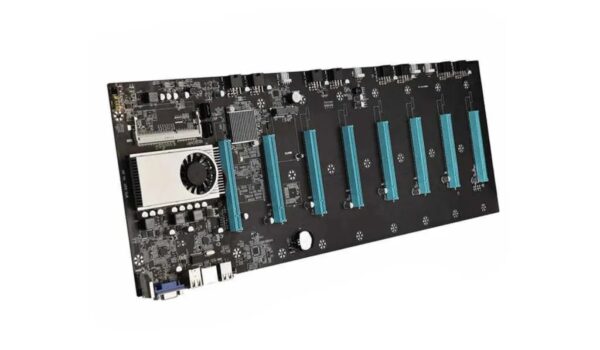
Installing the CPU and GPU
After installing the motherboard, mount the CPU onto it. Then, connect the graphics cards (GPUs) to the motherboard.
Connecting the Power Supply (PSU)
The power supply (PSU) must be connected to both the motherboard and the graphics cards. Ensure that the PSU has enough capacity and power to supply energy to all rig components.
Installing Storage
Storage devices (such as HDD or SSD) are necessary for installing the operating system and mining software. This step is very important because you should use a storage device with high read/write speeds.
Installing the Cooling System
One of the most critical parts of any mining rig is the cooling system. Mining continuously generates heat, so an appropriate cooling solution is essential to prevent overheating of the equipment and extend its lifespan.
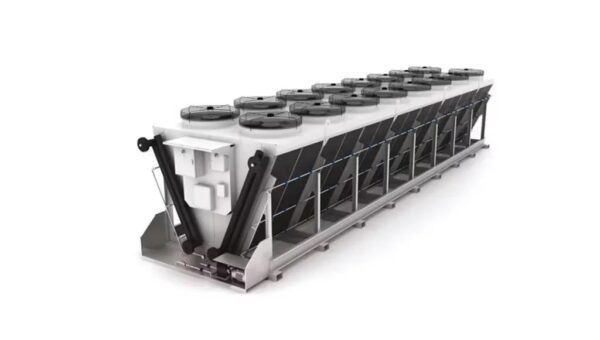
Installing the Operating System and Mining Software
After all hardware components are installed, proceed to install the operating system on the storage device. Then, install the suitable mining software for the chosen cryptocurrency and configure it. Usually, this software connects automatically to a mining pool and begins the mining process.
Setting Up the Wallet
Finally, you need to set up your cryptocurrency wallet to store the mining rewards. The wallet can be either software-based or hardware-based and must be highly secure.
Important Tips for Optimizing the Mining Rig
To improve performance and prolong the lifespan of the mining rig, paying attention to several key factors is essential:
Improving Efficiency and Extending Equipment Lifespan
Managing the heat produced by the devices is vital for maintaining optimal performance and extending the equipment’s longevity. Using effective cooling systems, such as quality fans or liquid cooling solutions, can prevent overheating and hardware damage.
Using Appropriate Cooling Systems
When selecting a cooling system, consider the type of equipment and the environment. For small or home-based setups, air cooling systems may be effective; however, for larger-scale operations, liquid cooling systems can deliver better performance.
Energy Saving Solutions
To reduce electricity costs, high-efficiency power supplies and effective cooling systems should be used. Additionally, software settings such as limiting the power consumption of GPUs and optimizing mining algorithms can help decrease energy usage.
Profitability of the Mining Rig
Many miners question whether building or setting up a mining rig is still cost-effective. The answer depends on factors such as cryptocurrency prices, network difficulty, and energy costs. In many cases, mining for non-professional miners—especially with solo setups—is not profitable.
Statistics show that, on average, out of roughly 700,000 blocks transferred, miners succeed about 270 times in receiving Bitcoin.
To estimate profitability through a mining rig, one must predict the cryptocurrency’s expected price, the probability of winning block rewards, and the average costs of setup and maintenance. If the expected return from the cryptocurrency rewards is less than the setup and operational costs, mining may not be economical. Websites like NiceHash can be helpful for profitability calculations.
Advantages of Mining Rigs
Mining rigs, as an independent method for mining cryptocurrencies, have many advantages that encourage many miners to use this approach.
Income Generation
Mining rigs receive rewards by solving complex mathematical problems and helping secure blockchain networks. These rewards are usually paid in cryptocurrency. For example, mining Bitcoin or Ethereum can generate significant profit; however, it depends on factors such as the rig’s processing power and electricity costs.
Independence from Mining Pools
A personal mining rig eliminates the dependence on mining pools. This means you have full control over the mining process and the rewards. While in mining pools miners split part of the rewards with others, using mining rigs means that all rewards belong completely to the owner of the rig.
Full Control Over Equipment
With a personal mining rig, you have complete control over the hardware and software used in the mining process. You can configure the equipment according to your specific needs, update mining software regularly, or even upgrade the hardware to achieve higher efficiency.
Disadvantages and Challenges of Mining Rigs
Although mining rigs offer many advantages, they also come with challenges and disadvantages:
High Equipment Costs
Setting up a mining rig requires a high initial investment. The cost of buying specialized hardware—such as powerful graphics cards or ASIC devices—can be very high. In addition, maintenance and hardware upgrade costs constantly add to overall expenses.
High Energy Consumption
Mining rigs consume a lot of energy because solving complex mathematical problems requires heavy processing. This high energy usage significantly increases operational costs. Additionally, there are environmental concerns due to high electricity consumption.
Need for Repair and Maintenance
Mining rigs run continuously and require monitoring and maintenance for optimal performance. Repairs, regular cleaning, and monitoring temperatures and component performance are essential tasks that miners must handle. Also, any failure in one of the components can stop the mining operation, which reduces profitability.
The Future of Mining Rigs
The future of mining rigs will be strongly influenced by changes in hardware, mining technologies, cryptocurrency prices, and new regulations.
Possible Changes in Hardware and Mining Technologies
With ongoing progress in mining, mining rig hardware and mining technologies are expected to change significantly. ASICs (Application-Specific Integrated Circuits) are increasingly becoming the primary choice for mining most cryptocurrencies because they provide the most efficient performance in terms of hash rate and energy consumption.
Therefore, GPU rigs will gradually lose ground and will be limited mostly to specialized use cases—such as mining coins like Monero that use the RandomX algorithm.
Impact of Changes in Cryptocurrency Prices and Regulations on Mining
Changes in cryptocurrency prices and regulations will have a major effect on the mining industry. A drop in cryptocurrency prices can reduce mining profitability. In these conditions, many smaller miners may not be able to continue profitably. On the other hand, an increase in cryptocurrency prices can create more motivation to keep mining; however, it is important to note that higher demand may lead to higher network difficulty and more intense competition.
Government regulations will also play a key role in the future of mining. For example, in 2021 China banned Bitcoin mining due to environmental concerns. As a result, many miners moved to other countries such as Kazakhstan and the United States. These changes can affect mining profitability.
Frequently Asked Questions (FAQ)
How do I set up a mining rig?
To set up a mining rig, you first need to purchase the necessary equipment, such as graphics cards, a motherboard, a processor, and a power supply, and connect them correctly. Then, install the appropriate mining software and perform the necessary configurations.
What is the cost of building or buying a mining rig?
The cost of building or buying a mining rig varies depending on the type and number of hardware components. Prices typically start from a few hundred dollars and can go up to several thousand dollars.
Can I earn a significant income with a small mining rig?
The income generated from a mining rig depends on factors like the type of cryptocurrency, processing power, and energy costs. It is difficult to earn a significant income with a small rig, unless you utilize cheaper energy sources.
How much electricity does a mining rig consume?
Power consumption depends on the type of hardware and processing power. On average, a mining rig can consume between 500 to 1500 watts of electricity.
Is mining with a mining rig still profitable?
The profitability of mining with a mining rig depends on the cryptocurrency market conditions, network difficulty, and electricity costs. In some situations, mining may not be profitable.
What type of equipment is most suitable for mining Bitcoin?
For mining Bitcoin, ASIC rigs are more suitable than GPU rigs because they have higher processing power and are optimized for the SHA-256 algorithm.
How can I reduce the energy consumption of a mining rig?
To reduce energy consumption, you can use more efficient cooling systems, optimize hardware settings, and choose cheaper energy sources.
What is the difference between a GPU rig and an ASIC miner?
GPU rigs are suitable for mining cryptocurrencies that require high processing power, while ASIC miners are designed for mining specific cryptocurrencies like Bitcoin and offer much higher processing power.
Conclusion
In this article, we attempted to answer the question, “What is a mining rig?” The process of mining cryptocurrencies involves specialized devices called mining rigs using their computational power to validate transactions and generate new digital currencies.
Mining rigs can utilize various hardware such as graphics cards, central processing units (CPUs), ASICs, and FPGAs to perform this task. Additionally, the correct selection of a mining rig depends on the type of cryptocurrency, suitable hardware, and optimizing energy consumption.
Similar articles you need to read:
The History of Digital Currencies | A Review of the Top 10 Crypto Currencies