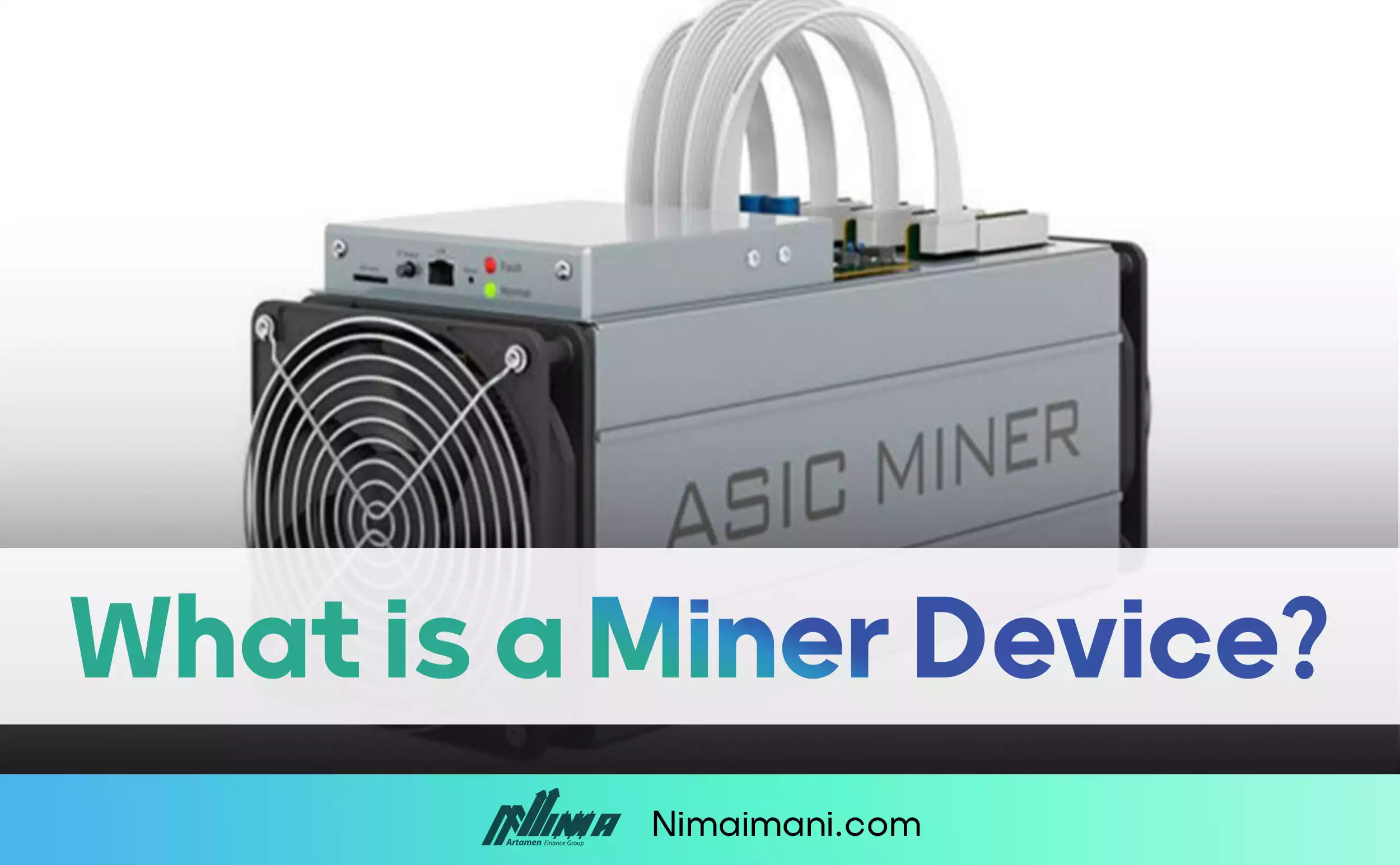
What is a Miner Device? Full Comprehensive Review of Cryptocurrency Mining Miners
It has been over 16 years since the birth of Bitcoin, a cryptocurrency that, with its phenomenal growth, has found a special place in the global economy. During this time, Bitcoin mining has transformed from a simple activity doable with home computers into a multi-billion dollar industry that has attracted significant attention.
Today, Bitcoin mining is not only considered a digital income-generating method but has also become a long-term investment and even a primary occupation for many. The idea that a device can produce cryptocurrency solely by consuming electricity is still astonishing to many individuals.
If you too have become interested in the world of Bitcoin mining and want to know precisely what mining is, what equipment is needed, and how to generate income from it, this article is written exactly for you.
In this guide, I have strived to explain complex concepts in simple terms so that everyone, even without prior technical knowledge, can become familiar with the Bitcoin mining process. So, if you are looking for answers to your questions about mining, stay with us until the end of this post. You can follow the latest news in the finance sector on Nima Imani’s website.
Table of Content
- What is Bitcoin Mining?
- Security of the Bitcoin Network
- Decentralized Money Distribution
- Increasing Scarcity
- Required Equipment for Mining
- Specialized Mining Device
- Bitcoin Wallet
- Stable Internet Connection
- Suitable Electricity, Cables, and Electrical Equipment
- Ventilation Equipment
- Acquiring a Bitcoin Mining Device
- Read Before Buying a Mining Device
- Best Bitcoin Mining Devices
- Can I Mine Other Cryptocurrencies with a Bitcoin Mining Device?
- Calculating Bitcoin Mining Profitability
- Mining Difficulty
- Electricity Price and Costs
- Bitcoin Price
- Starting Mining by Joining a Mining Pool
- Mining Bitcoin Without Purchasing a Device?
- What is Cloud Mining?
- Legal Status of Bitcoin Mining in Iran
- Understanding the Mechanism of Cryptocurrency Mining
- Top 10 Bitcoin Mining Devices
- Bitmain Antminer S21 Pro
- MicroBT Whatsminer M60S
- Bitmain Antminer S19j Pro
- MicroBT Whatsminer M30S++
- Canaan Avalon A1566
- Bitmain Antminer S21 XP Hydro
- Bitmain Antminer S19k Pro
- MicroBT Whatsminer M66S Immersion
- Canaan Avalon A1566 Immersion
- Bitdeer Sealminer A2
- The Most Powerful Device Isn’t Always the Best
- Research Your Desired Device Thoroughly
- Consider the Possibility of Device Failure and Repair
- Pay Attention to the Device Model and Hash Rate
- In-Person Purchase and Ready Delivery is Better
- Do Not Buy Used Miners, or Be Ten Times More Careful
- Be Cautious About Overclocked Miners
- Physical and Visual Inspection of the Device
- Distinguishing Between New and Used Mining Devices
- Attention to Packaging
- Checking the Body, Dust on Fans and Components
- Checking Power Sockets
- Testing the Mining Device After Purchase
- Conclusion

What is Bitcoin Mining?
The first question that arises for beginners is, what exactly is done in Bitcoin mining that makes it profitable? To get a complete answer to this question, it might be necessary to first understand Bitcoin well and become familiar with how it works.
But if I were to explain it very quickly and simply, Bitcoin mining can be defined as follows:
Bitcoin is a decentralized currency and network, independent of any specific country, entity, or company. The decentralization of Bitcoin, in simple terms, means that no one owns the Bitcoin network, and no one can control it alone. Therefore, anyone, anywhere in the world, by connecting to the Bitcoin network, can be a part of it.
In fact, the essence of Bitcoin’s existence and the reason for much hope in its future is this very decentralization. The Bitcoin network must depend on its people and users, not any specific person or entity.
Security of the Bitcoin Network
Now that Bitcoin is a decentralized network, when you send Bitcoin to someone, who supports your transaction to ensure the transfer happens? Who verifies Bitcoin transactions or maintains its security? You guessed it: volunteers called “miners.”
Of course, miners don’t do this for free. They provide their devices and hardware to the Bitcoin network, and in return for maintaining the network’s security, the Bitcoin network rewards them. This reward is the Bitcoin generated from the mining process.
In other words, miners, with their hardware, help keep the Bitcoin network secure and ensure that the network’s transactions reach their destination, much like how bank computers or servers work to verify your banking transaction.
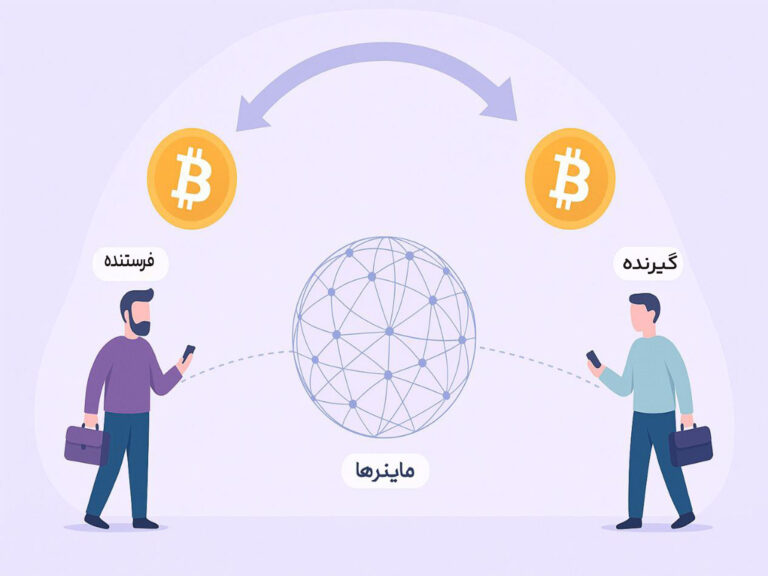
The scientific term for mining is “Proof Of Work” (PoW). During the mining operation, miners must compete to solve complex mathematical equations. As soon as a mining device reaches the solution, Bitcoin is generated and awarded to the winning miner as a reward.
To put it more simply: the Bitcoin network asks miners to prove their loyalty to the network by dedicating their processing power to solve mathematical problems that require electricity consumption. With the help of this process, if someone wants to attack the network, they would need to have more processing power than all other Bitcoin miners.
Decentralized Distribution of Money
Besides verifying transactions, mining also ensures that Bitcoin units are produced in a unique way and according to a pre-determined plan.
To maintain the network’s stability and prevent all Bitcoin units from being mined too quickly, Bitcoin has a metric called “mining difficulty.” The blocks of the Bitcoin blockchain (packages containing transactions) are produced every ten minutes.
If the processing power of Bitcoin miners becomes too high, they might be able to produce a block and mine Bitcoin faster than ten minutes. This would cause all Bitcoin units to be mined very quickly.
Thanks to the difficulty mechanism, when the miners’ processing power reaches a point where the time to find the solution to the mathematical equation decreases, the mining difficulty increases to keep the solution time at around ten minutes. On the other hand, if the miners’ processing power decreases, meaning the block creation time might exceed ten minutes, the difficulty decreases to bring it back to the ten-minute mark.
As you probably know, the total number of Bitcoins to be mined is limited to 21 million units, and after that, no more Bitcoin will be produced.
Increasing Scarcity
Every four years (every 200,000 blocks), through an event called “Halving,” the rate of new Bitcoin production is suddenly cut in half. This mechanism causes the scarcity of Bitcoin to increase.
Currently, 3.125 Bitcoins are produced every ten minutes, which will decrease to 1.5625 Bitcoins after the next halving in 2028.
At the time of this article’s update, over 19.8 million Bitcoin units have been mined. Considering the halving and the reduction in the rate of new Bitcoin production every four years, it is predicted that mining all Bitcoin units will take until the year 2140.
Technically, the Bitcoin network and the mining process are very complex, and what has been described is just a simplified summary for basic understanding. To avoid making the article too long and to move on to the mining tutorial, the theoretical explanation is sufficient up to this point.
Required Equipment for Mining
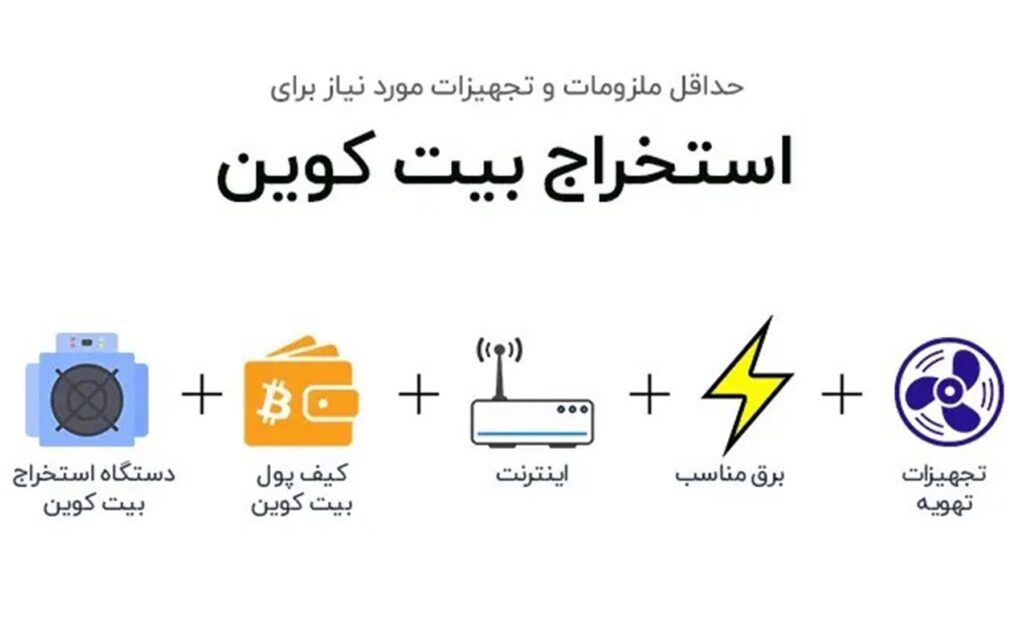
Like any industrial work, mining Bitcoin also requires certain conditions and equipment to be in place. The type and number of mining equipment can vary depending on the scale of the operation. For example, it’s obvious that the equipment needed for a large Bitcoin farm differs from that needed for a small farm. However, regardless of the scale of the operation, you will definitely need the following to mine Bitcoin:
- Specialized Mining Device or ASIC (Application-Specific Integrated Circuit)
- Bitcoin Wallet
- Stable Internet Connection (ADSL or TD-LTE)
- Suitable Electricity, Cables, and Electrical Equipment
- Ventilation Equipment (Fans)
Specialized Mining Device
In the early days and months of Bitcoin’s operation, its mining was done with CPUs, or regular processors. In 2010 and early 2011, if you dedicated your personal computer to Bitcoin mining, you might have been able to mine over fifty Bitcoins daily.
Today, with the expansion of the Bitcoin network and the increased power of its miners, mining Bitcoin with a home computer is nothing more than a fantasy. Profitable mining of this cryptocurrency is only possible with specialized devices, which we will discuss further.
Theoretically, it is still possible to mine Bitcoin with a regular computer or laptop; however, if you intend to make a profit, forget about it.
Bitcoin Wallet
As a miner, you need a Bitcoin wallet to receive and store your earnings. Since Bitcoin is the leading cryptocurrency in the market, there is no shortage of suitable wallets for it.
Bitcoin wallet software is completely free, and you can install one on your personal computer or smartphone right now.
To learn about reputable Bitcoin wallets, don’t miss the article “Best Bitcoin Wallets.”
Internet
You also need internet for Bitcoin mining. The speed and volume of the internet are not very important; rather, its stability and continuous, uninterrupted connection are crucial. ADSL and TD-LTE internet services are suitable for this purpose.
Electricity and Suitable Electrical Equipment
The most important factor to consider for Bitcoin mining is electricity. Mining devices consume a lot of power, and you must have adequate electricity and electrical equipment to continue your activity both legally and safely.
According to Iranian law, using household and subsidized electricity for mining is prohibited. In the final section of the article, I will explain more about the laws of mining in Iran.
Ventilation Equipment
In addition to generating a lot of noise, mining devices also get very hot, and a solution must be considered for this. To maintain the longevity and efficiency of the device, having cooling equipment is very important.
Acquiring a Bitcoin Mining Device
Asic Miner
Acquiring a Bitcoin Mining Device
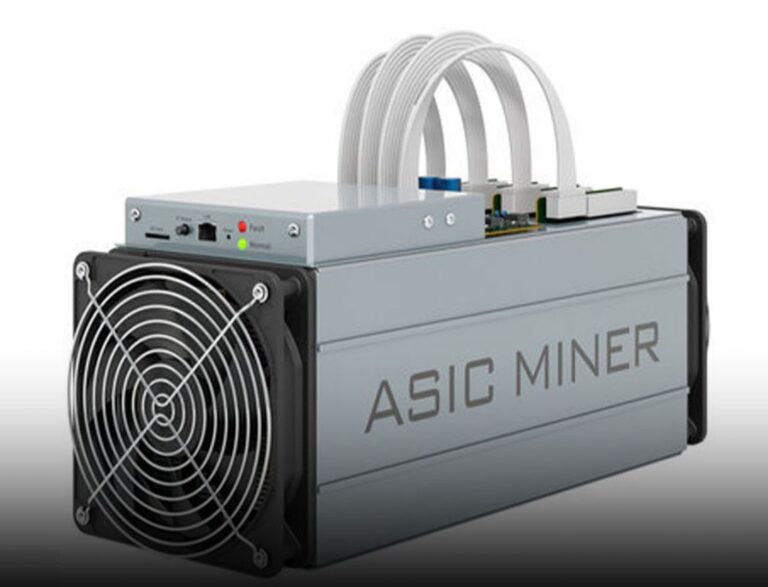
For profitable Bitcoin mining, you need specialized devices known as ASICs (Application-Specific Integrated Circuits).
Bitcoin mining devices, much like mobile phones, come in various brands, designs, and models. Each device may differ from others in the following aspects:
- Brand and Model: The manufacturer and model of the device. Example: Bitmain Antminer S19.
- Processing Power: The processing power of the mining device, measured in Terahashes per second (TH/s). Example: 95 TH/s – meaning this device has 95 terahashes of power.
- Power Consumption: The amount of electricity the device consumes, measured in Watts. Example: 3250W.
Mining devices are often initially pre-sold by manufacturers at a lower price before being distributed in the market. Besides the official manufacturer websites, Bitcoin mining devices are also sold on various platforms, including Amazon and eBay.
Due to international sanctions, directly purchasing mining devices from official vendors or international e-commerce websites is very difficult, and in most cases, you will have to rely on intermediaries.
Read Before Buying a Mining Device
Purchasing a mining device must be done with thorough research and consideration of your circumstances. In summary, the most important factors to consider when buying Bitcoin mining devices are:
- Device Power: How many hashes per second does your intended Bitcoin mining device produce? More hashes mean more power.
- Power Consumption: The power consumption of a Bitcoin miner is highly important and directly affects profitability. The lower the power consumption and the higher the device’s power, the more profitable the device will be.
- Price of the Mining Device: This factor should also be considered relative to your capital. The return on investment period is directly tied to the device’s price.
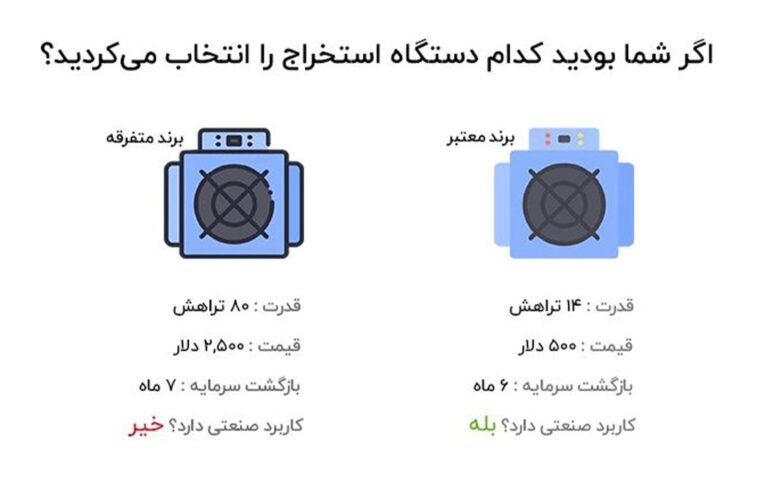
Do not purchase a mining device based solely on its price or power. The best ASIC device is the most efficient one. In fact, the most profitable mining device is one that has higher hash power and lower power consumption, and generally a faster return on investment period.
Furthermore, some mining devices promise high profitability but are of very poor quality and have a short lifespan. Always try to acquire devices from reputable brands that are used in mass production and on an industrial scale, and have, so to speak, proven themselves.
Best Bitcoin Mining Devices
From 2014 to the update of this article, hundreds of Bitcoin mining devices have been released to the market. Most of these devices have lost their efficiency and profitability today, and only a few devices remain that can still be used to compete with other miners.
The brands that manufacture mining devices vary in terms of reputation and popularity. Currently, the top five miner device manufacturers, in order:
- Bitmain – Manufacturer of Antminer devices
- MicroBT – Manufacturer of Whatsminer devices
- Canaan – Manufacturer of Avalon devices
- Innosilicon – Manufacturer of Terminator devices
- Ebang – Manufacturer of Ebit devices
The following table shows some of the best Bitcoin mining devices in 2025:
| Brand & Model | Processing Power | Power Consumption | Release Date |
|---|---|---|---|
| Bitmain Antminer S21 Hyd (335TH) | 335TH/s | 5360W | March 2024 |
| Antminer S21E XP Hyd 3U | 860Th/s | 11800W | Nov 2024 |
| Antminer S21 XP Hydro | 473TH/s | 5676W | Oct 2024 |
| Whatsminer M63S Hydro | 390Th/s | 7215W | Oct 2023 |
| Whatsminer M63 Hydro | 366Th/s | 7283W | Oct 2023 |
| Whatsminer M66S Hydro | 298Th/s | 5513W | Nov 2023 |
| Bitmain Antminer S19 XP Hyd (255Th) | 255Th/s | 5304W | Oct 2022 |
| Bitmain Antminer S19 XP (140Th) | 140Th/s | 3010W | Jul 2022 |
| Canaan Avalon Made A1366 | 130Th/s | 3250W | Nov 2022 |
| MicroBT WhatsMiner M56S | 212Th/s | 5550W | Jan 2023 |
| MicroBT Whatsminer M50S | 126Th/s | 3276W | Jul 2022 |
| Bitmain Antminer S19 Pro | 110Th/s | 3250W | May 2020 |
| Bitmain Antminer S19 | 95Th/s | 3250W | May 2020 |
| MicroBT Whatsminer M30S | 86Th/s | 3268W | Apr 2020 |
| Canaan AvalonMiner 1246 | 90Th/s | 3420W | Jan 2021 |
| MicroBT Whatsminer M31S | 70Th/s | 3220W | Apr 2020 |
| MicroBT Whatsminer M20S | 68Th/s | 3360W | Aug 2019 |
| StrongU STU-U8 Pro | 60Th/s | 2800W | Sep 2019 |
| MicroBT Whatsminer M21S | 56Th/s | 3360W | Jun 2019 |
| Ebang Ebit E12+ | 50Th/s | 2500W | Sep 2019 |
its possible that some miners still use older models like the Antminer S9j. As I mentioned earlier, what matters most is profitability, device lifespan, and the return on investment period, not necessarily the newness of the device.
Can I Mine Other Cryptocurrencies with a Bitcoin Mining Device?
The answer to this question is almost universally no.
In fact, most mining devices only support a specific cryptographic algorithm. For example, the algorithm for Bitcoin mining is SHA-256. Therefore, with Bitcoin mining devices, you can also mine other cryptocurrencies that use a similar algorithm, which include Bitcoin Cash, Bitcoin SV, and a few less prominent cryptocurrencies.
However, it’s possible that in the future, models will be released that support other algorithms in addition to SHA-256. In that case, the range of cryptocurrencies that can be mined with a single device will increase. Also, remember that a mining device cannot mine two or more cryptocurrencies simultaneously.
Calculating Bitcoin Mining Profitability
For example, the price of industrial electricity in many areas averages around 700 Tomans per kilowatt-hour, while the price of household electricity in most parts of the country is around 300 Tomans. An S19 device has a power of approximately 95 terahashes and consumes about 3250 Watts. Based on this, you can easily calculate the profitability of this device using a mining calculator.
If I were to define “mining profitability” better, a miner’s income is directly tied to the return on investment period. In fact, what matters more than anything else is the return on investment period, not the amount of Bitcoin the device can earn.
In other words, a device with a 6-month ROI is more valuable than a device with a 10-month ROI, even if the second device has a higher hashrate.
Many factors, large and small, can influence mining profitability or, more precisely, the return on investment period. However, the following can be listed as the most important factors:
Mining Difficulty
As I explained earlier, mining difficulty is a parameter embedded in the Bitcoin network to ensure that Bitcoin blocks are created approximately every ten minutes, no sooner and no later.
In other words, to prevent miners from suddenly producing new blocks and Bitcoins too quickly with the high power of their hardware, the mining difficulty increases as the miners’ processing power increases, and vice versa.
Therefore, if the price of Bitcoin is low, high mining difficulty can drastically reduce profitability. An increase in mining difficulty means that to maintain your profitability, you need more processing power, which requires you to deploy more powerful mining devices.
Electricity Price and Costs
The power consumption of the device and the electricity tariff directly impact mining profitability. For this reason, you must carefully calculate the electricity costs to assess your return on investment. High electricity prices, combined with high mining difficulty and low Bitcoin prices, can cause irreparable losses to miners.
Bitcoin Price
The real-time price of Bitcoin is another very important factor in mining profitability. For instance, in 2018, when the price of Bitcoin dropped to $3,200, many miners turned off their devices because the mining profit didn’t even cover their electricity costs.
Starting Mining by Joining a Mining Pool
After acquiring a device and choosing a Bitcoin wallet, we reach the most important part of the tutorial: joining a mining pool and starting work. Given the rapid growth of the mining industry, to profitably mine Bitcoin or any other currency, you will likely need to join a Mining Pool.
A mining pool is a virtual place (imagine a website) where miners combine their processing power and all work together to mine a block. In this method, each miner profits based on their share of the processing power.
You could say that miners worldwide contribute their hardware’s processing power to a mining pool, and the mining pool, on behalf of all miners, competes with other pools to find the block solutions.
Do you want to start working directly without connecting to a mining pool? If you have over 50,000 powerful mining devices, it might not be a bad idea.
The truth is, with the increasing power of Bitcoin miners and the influx of significant capital for purchasing mining hardware, small miners can no longer profit without joining a mining pool. Only some large mining farms with tens of thousands of devices can manage direct mining (Solo mining).
The overall process of connecting to a mining pool is very simple:
- After research, you register on a mining pool’s website.
- You provide your wallet address to the mining pool.
- You receive the necessary settings for your devices from the mining pool and activate your devices with them.
Mining Bitcoin Without Acquiring a Device?
If you don’t have a suitable location, adequate electricity, or sufficient equipment for Bitcoin mining, but are still determined to mine Bitcoin, you can opt for “cloud mining.”
However, this method – especially in Iran – carries its own risks and costs. If you think about them carefully, you will likely abandon the idea of cloud mining.
What Is Cloud Mining?
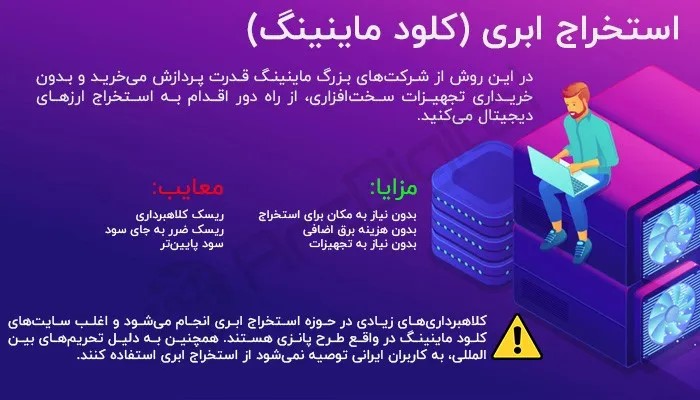
Cloud mining, also known as cloud mining, refers to services and companies that sell you the processing power of their hardware and handle the mining and maintenance of equipment.
In fact, with cloud mining, you can rent the mining equipment of cloud mining companies or purchase processing power (hash rate) from these companies without needing to buy expensive hardware or provide suitable electricity and location.
By doing this, all you need is a simple computer or mobile phone to access your account and receive your profits in your wallet.
Therefore, the advantages of cloud mining are:
- You don’t need a location for mining.
- You don’t need to provide electricity and electrical equipment.
- You don’t need a mining device and other mining equipment.
This is one side of the coin. In cloud mining, due to a lack of transparency in activities, the risk of fraud is very high. In most cloud mining schemes, which are in fact a type of Ponzi scheme, no mining is done with your money; rather, you are only gradually paid a small amount of Bitcoin, which in the end will be less than your initial investment.
Simply put, most companies active in cloud mining either operate with unhealthy business models or are just looking to empty your pockets. By unhealthy models, we mean that in the end, you either lose your money, or your profit will be less than if you had invested directly in Bitcoin.
Therefore, the disadvantages of cloud mining are:
- Risk of fraud
- Opaque mining
- Lower profits – operators must cover their costs.
- Price fluctuations that may reduce profits or halt operations.
- Lack of control and flexibility in the process.
Legal Status of Bitcoin Mining in Iran

If you want to start Bitcoin mining in Iran, before starting your investment and purchasing devices and equipment, you must be aware of the latest legal status of mining in Iran and then proceed to obtain the necessary permits.
Investing in mining without a license and accurate knowledge of the laws can lead to many problems. The penalty for possessing a Bitcoin mining device ranges from several hundred million Tomans in fines to thousands of judicial issues.
According to a government cabinet resolution in 1998 (2019), mining Bitcoin or any other digital currency in Iran is legal; however, it is necessary to obtain a permit from the Ministry of Industry, Mine, and Trade, and mining without a permit is declared illegal.
Furthermore, regarding electricity and its tariffs, there are many challenges for mining operators in Iran. According to the law, digital currency mining must be done by obtaining a power supply connection from the Ministry of Energy and with an export electricity tariff, the rate of which may change with dollar exchange rate fluctuations.
Also, during times such as summer days when the country is at peak consumption and needs electricity for domestic and industrial use, the electricity for mining farms is usually cut off by the Ministry of Energy.
Therefore, mining in Iran is an industrial and legal activity; however, for hassle-free mining, the necessary permits must be obtained from the Ministry of Industry and the Ministry of Energy, which itself requires wearing a pair of iron shoes.
In case of mining without the necessary permits, the Ministry of Energy can impose a fine, collect the electricity connection, and also, judicially, has the right to confiscate the devices and even take legal action.
Understanding the Mechanism of Digital Currency Mining
To gain a deeper understanding of the digital currency mining process, it is necessary to become familiar with its technical aspects such as transactions, blocks, hashes, hash rate, algorithms, as well as concepts like network difficulty and the role of miners and mining pools. In this section, we will examine these in detail.
Transactions, Blocks, and Validation
In blockchain networks, every money transfer is recorded as a “transaction.” After being broadcast to the network, transactions enter a temporary queue called the “Mempool.” Miners are responsible for taking transactions from the Mempool, verifying their validity, and placing them into a candidate block.
To validate a transaction, a miner must check the following:
- Sufficient balance of the sender.
- Validity of the digital signature.
- Absence of a similar transaction in previous blocks (to prevent double-spending).
Of course, these checks are not done manually or with human intervention. The cryptocurrency’s core software performs these tasks. After validation, transactions are placed into a new block containing information such as the number and total of transactions, timestamp, protocol version, and the hash of the previous block. The hash of each block links it to the previous block, forming a chain of interconnected blocks.
Hashes, Hash Rate, and Algorithms
A hash is the output of a mathematical function that converts input data of any size into an output of a fixed length. The most important characteristic of a hash function is its one-way nature; meaning, it’s impossible to recover the input from the output. Additionally, even a minor change in the input results in a completely different output.
Miners, by trying different hashes (mainly by changing the Nonce value in the block header), aim to find a hash that is less than or equal to a target value. Given the unpredictable nature of the hashing process, finding a valid hash requires trying billions or trillions of different combinations.
Here, we need to understand what hash rate is. Hash rate indicates the number of hashes calculated per second by a miner or the entire network. This metric is measured in units of hashes per second (H/s) and prefixes like kilo, mega, giga, tera, and peta. An increase in a miner’s hash rate increases their chances of discovering a block and earning a reward.
Mining Difficulty of Digital Currencies
Network difficulty is a parameter that determines the complexity of finding a valid hash for a block. As difficulty increases, miners must perform more calculations to find the desired hash.
The network difficulty is dynamically adjusted in proportion to the total processing power of the network. The goal is to maintain a constant average time for mining a block (for example, 10 minutes in the Bitcoin network), despite constant fluctuations in the number and power of miners.
Top 10 Bitcoin Mining Devices
The following list presents 10 of the best Bitcoin mining devices in 2025. These devices have shown the highest possible efficiency among miners in the first quarter of 2025. In fact, factors such as energy efficiency, price, size, weight, and consumer acceptance have been considered in preparing this list.
- Bitmain AntMiner S21 Pro
- MicroBT Whatsminer M60S
- Bitmain AntMiner S19j Pro
- MicroBT Whatsminer M30S++
- Canaan Avalon A1566
- Bitmain AntMiner S21 XP Hydro
- Bitmain AntMiner S19k Pro
- MicroBT Whatsminer M66S Immersion
- Canaan Avalon A1566 Immersion
- Bitdeer Sealminer A2
We emphasize again that for mining activities, each person should acquire a device based on their operating region and conditions, and the use of some older devices might be more logical for some individuals. Also, note that a higher device power does not necessarily mean a better device. Remember that factors such as power consumption, lifespan, weight, noise, and size can directly or indirectly affect mining profitability.
Bitmain AntMiner S21 Pro
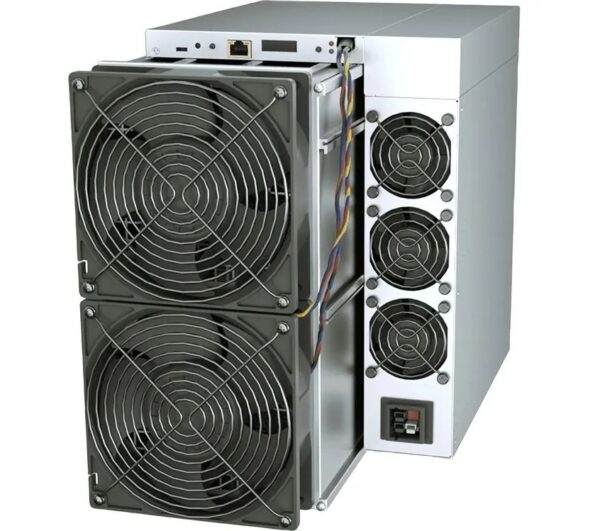
- Manufacturer: Bitmain
- Model & Power: AntMiner S21 Pro – 234 Terrahash
- Release Date: July 2024
- Dimensions: 195 x 290 x 400 mm
- Weight: 18 kg
- Noise: 75 decibels
- Number of Fans: 2
- Power Consumption: 3531W
- Voltage: 12V
- Connectivity: Network Cable (Ethernet)
- Operating Temperature: 5 – 45 °C
- Energy Efficiency (Joules per Terahash): 15.09
The Antminer 21 series represents the flagship products of Bitmain, the largest manufacturer of mining devices. The Antminer S21 Pro, offering the best performance and return on investment among all miners currently available, was released in July 2024.
With a processing power of 234 TH/s and a power consumption of 3,510W, the S21 Pro is significantly superior to previous Bitmain models and its current competitors in terms of energy efficiency (power relative to electricity consumption).
The only drawbacks mentioned are its approximate weight of 18 kg and noise levels exceeding 75 decibels, which are not major issues for an industrial miner.
MicroBT Whatsminer M60S
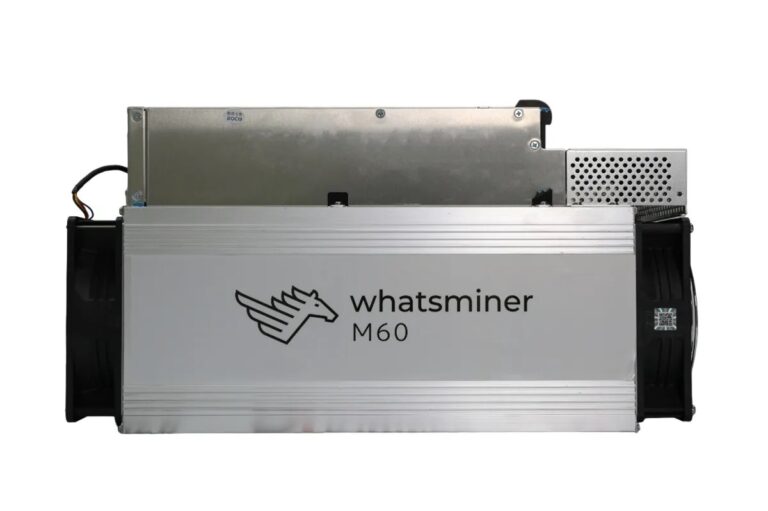
- Manufacturer: MicroBT
- Model & Power: Whatsminer M60S – 186 Terrahash
- Release Date: February 2024
- Dimensions: 155 x 226 x 430 mm
- Weight: 13.5 kg
- Noise: 75 decibels
- Number of Fans: 2
- Power Consumption: 3441W
- Voltage: 12V
- Connectivity: Network Cable (Ethernet)
- Operating Temperature: 5 – 35 °C
- Energy Efficiency (Joules per Terahash): 18.5
The MicroBT Whatsminer M60S is one of the most efficient Bitcoin miners to date, utilizing the SHA256 algorithm. While it offers a suitable hashrate, it is also one of the most cost-effective miners on the market.
However, it’s important to note that this device produces a considerable amount of noise, which might make it less suitable for home-based mining setups.
Bitmain AntMiner S19j Pro
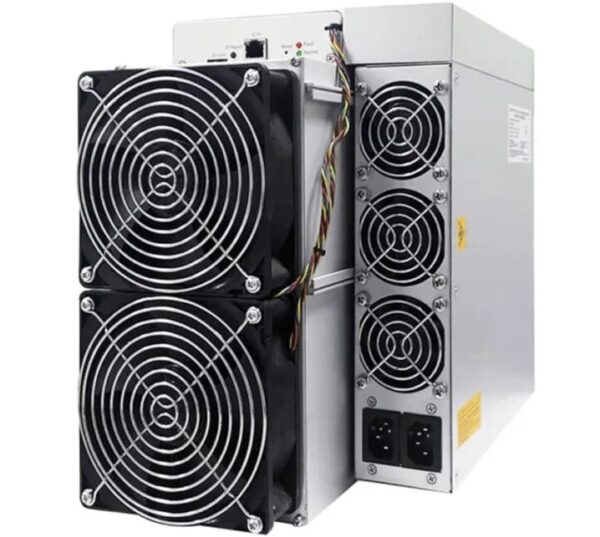
- Manufacturer: Bitmain
- Model: Bitmain AntMiner S19j Pro – 100 Terrahash
- Release Date: June 2021
- Dimensions: 195 x 290 x 370 mm
- Weight: 13.2 kg
- Noise: 75 decibels
- Number of Fans: 4
- Power Consumption: 3050W
- Voltage: 12V
- Connectivity: Network Cable (Ethernet)
- Operating Temperature: 5 – 35 °C
- Energy Efficiency (Joules per Terahash): 29.5
Bitmain has also produced less expensive and more affordable models than the S21. The S19j Pro is one of Bitmain’s economical models. After the Bitcoin halving, which halved the mining reward for this cryptocurrency, the Antminer S19j Pro, with its 100 TH/s power and 2950W power consumption, managed to meet expectations well.
Therefore, if we do not consider energy consumption, this device is currently one of the most powerful Bitcoin mining devices. However, in terms of energy efficiency, it falls short of the flagship model, the Antminer S21 Pro. Given its high power consumption, using this device in locations with cheap electricity would be highly profitable.
MicroBT Whatsminer M30S++
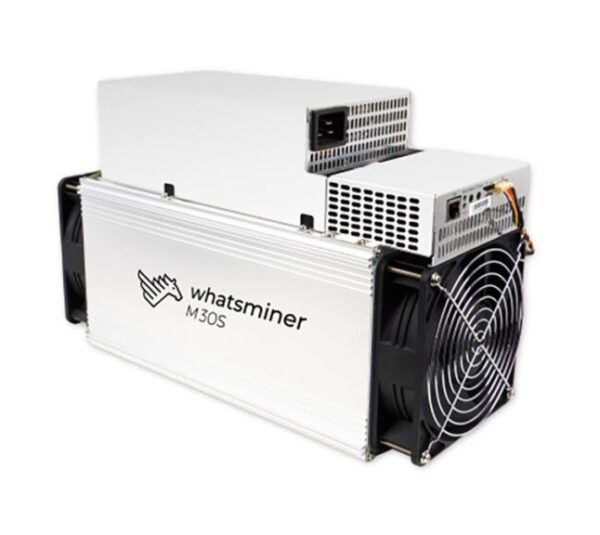
- Manufacturer: MicroBT
- Model: Whatsminer M30S++ – 112 Terrahash
- Release Date: October 2020
- Dimensions: 155 x 225 x 425 mm
- Weight: 10.5 kg
- Noise: 75 decibels
- Number of Fans: 2
- Power Consumption: 3472W
- Voltage: 12V
- Connectivity: Network Cable (Ethernet)
- Operating Temperature: 5 – 40 °C
- Energy Efficiency (Joules per Terahash): 31
This device was released with a hashrate of 112 TH/s, making it one of MicroBT’s most powerful devices. Its energy efficiency of 31 Joules per Terahash is excellent for its class, though it cannot compete with the energy efficiency of the Antminer S21 Pro.
In terms of dimensions, this device is very suitable for farms and can be installed both horizontally and vertically. Additionally, some security features have been incorporated into this device to prevent the operation of mining viruses and hacking.
Canaan AvalonMade A1566
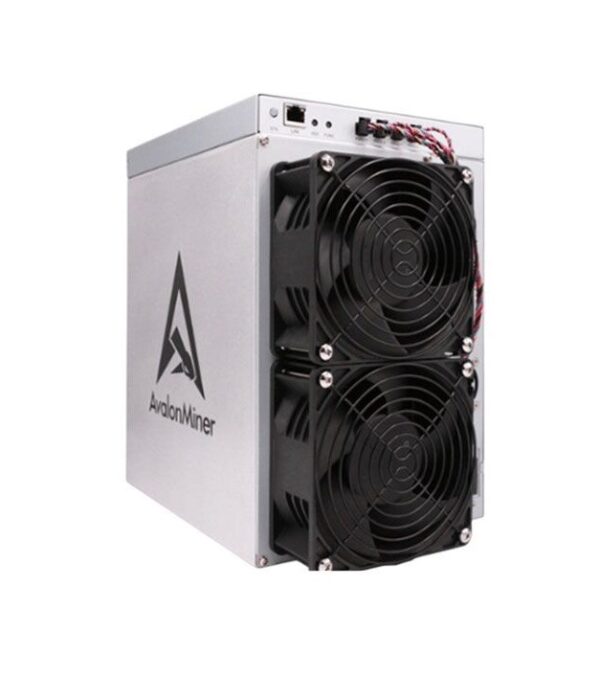
- Manufacturer: Canaan
- Model & Power: AvalonMade A1566 – 185 Terrahash
- Release Date: January 2025
- Dimensions: 395 x 390 x 290 mm
- Weight: 15.9 kg
- Noise: 75 decibels
- Number of Fans: 2
- Power Consumption: 3681W
- Voltage: 12V
- Connectivity: Network Cable (Ethernet)
- Operating Temperature: 5 – 35 °C
- Energy Efficiency (Joules per Terahash): 18.5
The AvalonMade A1566 is an excellent option for small to medium-sized mining farms. This device shares many similarities with Bitmain’s successful miners but offers better energy efficiency. The Canaan AvalonMade A1566 has a hash rate of approximately 185 TH/s and a power consumption of 3,681W.
Overall, the new series of Avalon miners, and specifically the A1566, are very competitive choices in terms of performance compared to flagships like the Antminer.
Bitmain AntMiner S21 XP Hydro
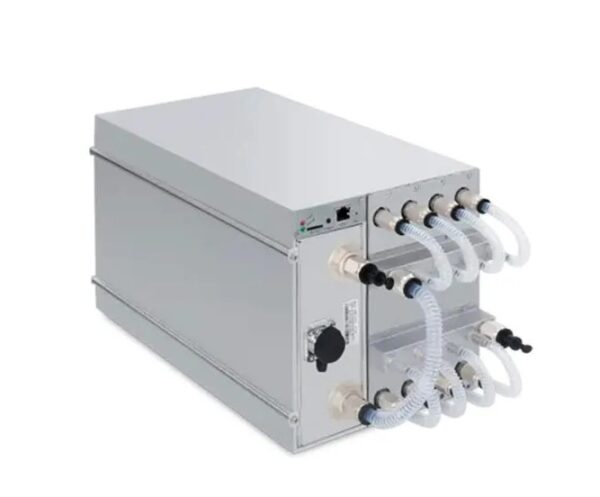
- Manufacturer: Bitmain
- Model & Power: AntMiner S21 XP Hydro – 473 Terrahash
- Release Date: January 2024
- Dimensions: 316 x 430 x 570 mm
- Weight: 15.4 kg
- Noise: 50 decibels
- Power Consumption: 5676W
- Voltage: 12V
- Connectivity: Network Cable (Ethernet)
- Operating Temperature: 5 – 45 °C
- Energy Efficiency (Joules per Terahash): 12
The Antminer S21 XP Hydro boasts a high hash rate compared to its competitors due to its liquid cooling system, which also makes it very quiet. This system leads to increased mining speed and high efficiency per hash output.
Overall, the S21 XP Hydro is a miner that allows for Bitcoin mining with the highest efficiency. Manufactured by Bitmain, it is an incredibly powerful ASIC with an unparalleled efficiency of 12 Joules per Terahash.
Bitmain AntMiner S19k Pro
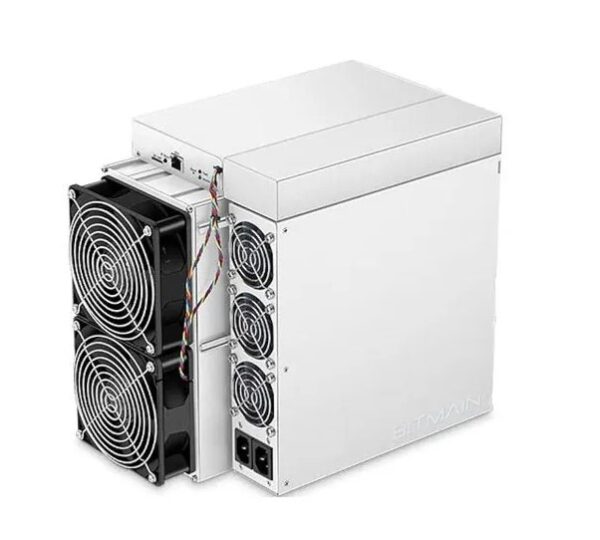
- Manufacturer: Bitmain
- Model & Power: Bitmain AntMiner S19k Pro – 120 Terrahash
- Release Date: April 2023
- Dimensions: 195 x 290 x 400 mm
- Weight: 12.8 kg
- Noise: 75 decibels
- Number of Fans: 4
- Power Consumption: 2760W
- Voltage: 12V
- Connectivity: Network Cable (Ethernet)
- Operating Temperature: 5 – 45 °C
- Energy Efficiency (Joules per Terahash): 23
The Bitmain Antminer S19k Pro is a good option for miners looking for a powerful yet more affordable device than the S21 Pro. With a power consumption of 2,670 watts, the S19k Pro offers a hashing power of 120 TH/s.
This device generates significant noise, making it potentially unsuitable for home mining. Therefore, it is recommended to set up the device in a non-residential area.
MicroBT Whatsminer M66S Immersion
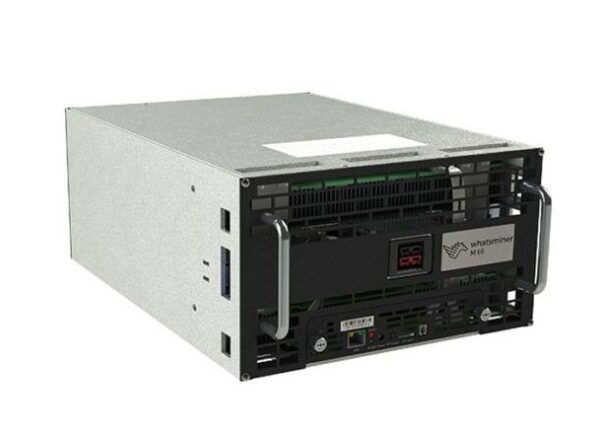
- Manufacturer: MicroBT
- Model & Power: Whatsminer M66S Immersion – 298 Terrahash
- Release Date: October 2023
- Dimensions: 147 x 401 x 2675 mm
- Weight: 16 kg
- Noise: 75 decibels
- Power Consumption: 5513W
- Voltage: 12V
- Connectivity: Network Cable (Ethernet)
- Operating Temperature: 5 – 45 °C
- Energy Efficiency (Joules per Terahash): 18.5
The MicroBT Whatsminer M66S Immersion is a very powerful miner. With a hashing power of 298 TH/s and an energy efficiency of 18.5 Joules per Terahash, it is among the strongest miners available on the market.
This model is an industrial and noisy miner. Furthermore, its power consumption is very high, around 5,513 watts. For this reason, it is not recommended for home mining.
Canaan Avalon A1566 Immersion
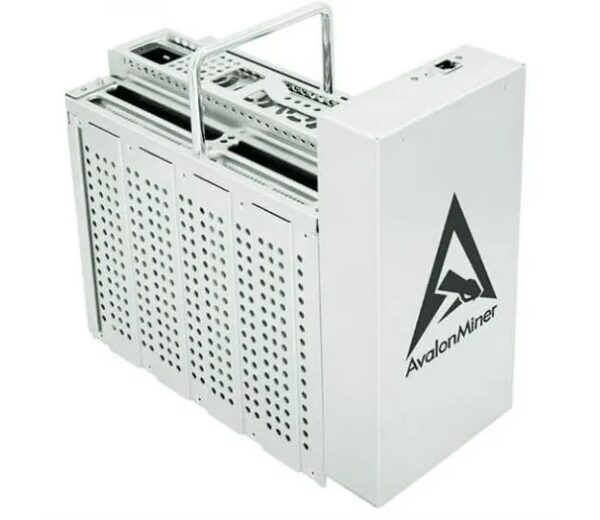
- Manufacturer: Canaan
- Model & Power: Avalon A1566 Immersion – 249 Terrahash
- Release Date: July 2024
- Dimensions: 292 x 171 x 301 mm
- Weight: 11.3 kg
- Noise: 50 decibels
- Power Consumption: 4500W
- Voltage: 12V
- Connectivity: Network Cable (Ethernet)
- Operating Temperature: 20 – 50 °C
- Energy Efficiency (Joules per Terahash): 18
The Avalon A1566 Immersion is one of Canaan’s most powerful miners. Its 249 TH/s hash power and 4500W power consumption place this miner on the purchase list of many industrial miners.
Its very suitable weight relative to its hash power (11.3 kg) and its relatively compact dimensions make it widely used in industrial-scale mining operations.
Bitdeer Sealminer A2
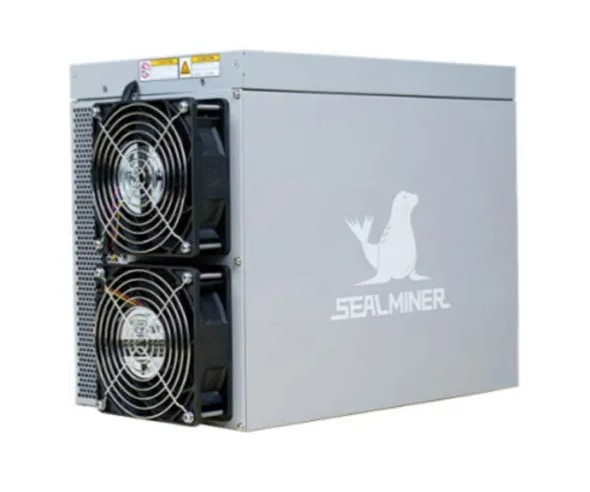
- Manufacturer: Bitdeer
- Model & Power: Bitdeer Sealminer A2 – 226 Terrahash
- Release Date: March 2025
- Weight: 12.5 kg
- Noise: 75 decibels
- Number of Fans: 4
- Power Consumption: 3729W
- Voltage: 12V
- Connectivity: Network Cable (Ethernet)
- Operating Temperature: 5 – 40 °C
- Energy Efficiency (Joules per Terahash): 16.5
The last item on the list of the best Bitcoin mining devices is the Bitdeer Sealminer A2. This device has a power of 226 terahashes per second and consumes 3,729 watts of electricity, resulting in an energy efficiency of 16.5 Joules per Terahash.
This miner also has a high power consumption and, with 4 fans, is suitable for industrial use. This device is very new, and it is advisable to hold off on purchasing it for now.
Other Devices
There are currently hundreds of different models of Bitcoin mining devices, each with varying hash power and power consumption. For example, Bitmain’s Antminer S21 series includes several different models with varying hash rates. Therefore, be sure to confirm the model and hash rate of the device before purchasing a mining machine.
Needless to say, not all devices from every brand are suitable for mining. In addition to environmental and infrastructural conditions, it is best to consider whether a mining device is industrial-grade before purchasing. For instance, even if a mining device has excellent hash rate and energy efficiency, you should ask yourself these questions before buying:
- Does this mining device perform well in my intended environment (e.g., dusty)?
- How reputable is the brand of this mining device?
- Which farms use this mining device? Is it an industrial-use device, or is it made for home and individual use?
The Most Powerful Device Isn’t Always the Best
As mentioned, mining devices are offered under various brands and models. Always remember that a more powerful device does not necessarily mean it is the most suitable. The lifespan and the possibility of long-term use of a mining device are very important. Some miners show very high profits but have a short lifespan, or their weight and dimensions are not suitable for mining.
It is best to always choose a mining device from a reputable manufacturer that has proven itself. An industrial-use device that is utilized by large mining farms is the most profitable Bitcoin mining device to purchase because such devices have appropriate weight, low dimensions, and a long lifespan. The weaker the brand you choose, the higher your risk.
Additionally, the power consumption of a Bitcoin or other cryptocurrency mining device can affect its suitability. In areas where electricity costs are low, you can opt for a more power-hungry but cheaper device. Conversely, in locations with very high electricity costs, it is better to consider less powerful but more energy-efficient devices for mining. For example, under normal conditions, the “Antminer S17 Pro” is more profitable than the “Whatsminer M20S.” However, with industrial electricity tariffs below 200 Tomans, the return on investment for the M20 is greater than for the S17 Pro.
Research Your Desired Device Thoroughly
When selecting a mining device, thoroughly research the model you are interested in. The most important factors to know about a mining device are:
- Hashrate
- Power consumption
- Number of hash boards
- Number of chips per hash board
- Cooling (number and power of fans)
- Weight
- Dimensions
- Suitable ambient temperature for operation
Device Malfunction and Repair Possibilities
Mining devices, like any other piece of equipment, can malfunction and require repairs. The most crucial component in a miner is the “hash board.” It’s important to consider which miners have more readily available parts and repair technicians in Iran before making a purchase. As of the time of writing this article, Antminer and Whatsminer devices have the widest availability of parts and technicians within the country.
Pay Attention to the Model and Hash Rate
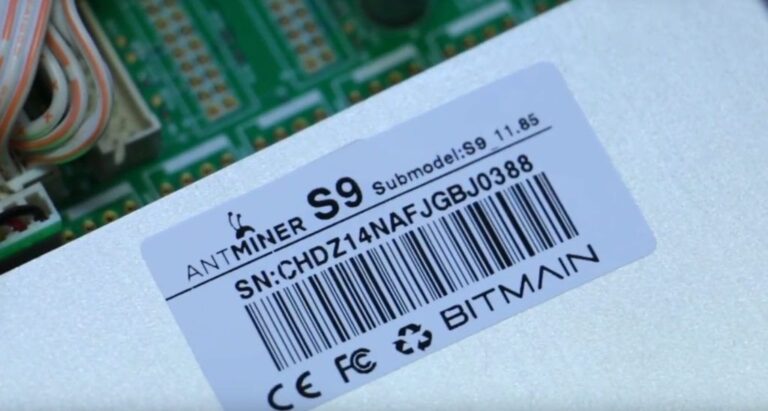
Sometimes, for a specific model, several mining devices with different hash rates are offered. For example, for the “Innosilicon T3” device, three different models with varying powers (39, 50, and 54 TH/s) exist in the market. Some unscrupulous sellers exploit buyers’ lack of knowledge and sell weaker devices, which are cheaper, at the price of the more powerful models. Therefore, ensure you are getting the exact hash rate you intend to purchase.
The hash rate and model of a mining device are usually engraved on a label attached to it. You can also cross-reference the serial number on the device with the serial number on its packaging.
In-Person Purchase and Ready-to-Ship is Preferable
After selecting a suitable seller (an individual or a website), if possible, try to arrange for an in-person delivery rather than just placing an order. This significantly reduces the risk of scams. Direct, in-person transactions are always the best and lowest-risk purchasing method. For rapid return on investment, ready-to-ship devices are a better choice than pre-orders.
Do Not Buy a Used Miner, or Be Ten Times More Cautious
Buying a used miner, like any other used product, carries significantly more risk than purchasing a new one. Remember that miners typically run 24/7, and naturally, the higher the operating hours of a used device, the shorter its remaining useful life.
Since a used miner could be faulty or not perform at its original capacity, be sure to request a testing period of 24 to 48 hours from the seller. Thoroughly inspect the physical appearance of the device and its power supply. Research the prices of used miner devices on classified ad websites to get an average price. Make sure to inspect and receive the used device in person and in a suitable location (like the seller’s home or shop).
Usually, by looking inside the device through the fans, you can get a close estimate of its maintenance conditions. If there is a small amount of dust on the hash boards, it indicates good maintenance. If the device’s exterior appears neglected, it’s better to avoid purchasing it, as the previous owner likely did not maintain it under ideal conditions.
Be Cautious About Overclocked Miners
Some miners “overclock” their devices using unofficial firmware. This means they bypass limitations imposed by the manufacturer to significantly increase the device’s power. This practice is very risky because it increases power consumption and the device’s temperature, potentially leading to power supply burnout or damage to the device itself. Therefore, try not to buy overclocked miners, or if you do, exercise extreme caution.
Inspect the Device Physically and Visually
Thoroughly inspect the mining device physically. Check the casing, power supply, lights, fans, ports, connectors, and all external components. A device that has suffered physical damage will have a much shorter lifespan. For added assurance, you can also hold the mining device firmly in your hands and shake it a few times to ensure internal components are securely attached. Remember that mining devices can sustain physical damage during manufacturing or shipping, so examine its exterior carefully before powering it on.
Attention to Packaging
If the miner is new, you should first examine the packaging to ensure it has not been opened and that the seals and box are original. By checking the device’s serial number and inquiring about it on the manufacturer’s website, you can determine the production date, warranty period, and authenticity.
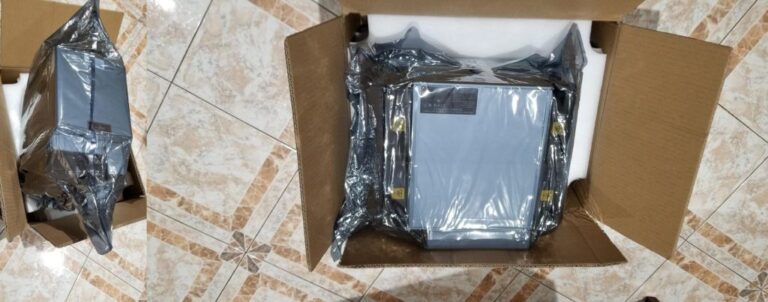
When you open the miner’s box, devices like Antminer are usually inside anti-static bags, which would be noticeable if opened and resealed. These bags often use single-use tapes that are very difficult to reapply once opened.
Inspecting the Casing, Dust on Fans, and Components
Numerous scratches on the device’s casing are an indicator that it might be used. Dust residue is also typically found on the fans and components of used devices. The white parts of used components often turn yellow over time.
Checking the Power Connectors
A primary difference between used and new miners lies in the six-pin power connectors for the hash board. Due to the high current flow, these connectors turn yellow after a short period of operation, making them clearly distinguishable from new ones.
Despite all these indicators, there’s still no foolproof method for definitive identification. It’s best to purchase new devices from reputable sellers.
Testing the Mining Device After Purchase
The best way to test a mining device is to set it up and connect it to a mining pool for 24 to 48 hours, monitoring its performance throughout this period. To check the miner’s status, simply navigate to the “Status” section in the device’s management panel.
Each mining device has several hash boards (typically three to four), and each hash board contains a number of chips. The “Status” section in the device’s management panel is the most reliable source of information regarding the device’s condition.
During the miner monitoring and testing phase, you should pay attention to the following information visible in the miner’s “Status” section:
- Elapsed: The duration the miner has been operational since it was powered on.
- Current Hash Rate (GH/S): The instantaneous processing power.
- Average Hash Rate (GH/avg): The average processing power over a period.
- Fan Speed (FanSpeed): Measured in revolutions per minute (usually between 5,000 and 6,000 RPM).
- Frequency: The operating frequency of the components.
- Hash Board (Chain or Device): Information about each individual hash board.
- Chips (Chips or ASIC): Details about the processing chips on each hash board.
- Temperature (Temp or Temperature): The operating temperature of the components.
- Normal and Healthy Status: Indicated by the number ‘0’ and ‘Alive’.
- Abnormal Status: Indicated by an ‘x’ and ‘Dead’.
For example, the following image displays the status screen of a Whatsminer M20S:
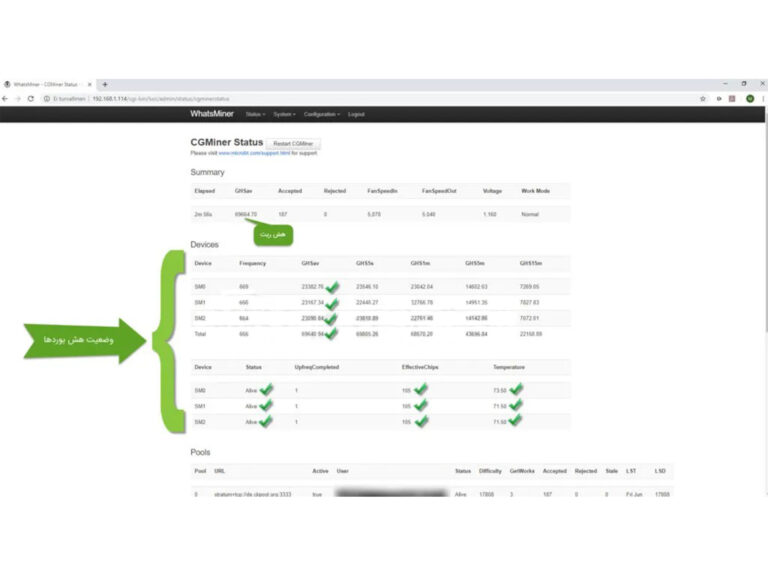
As you can see in the image above, the Whatsminer status screen shows an average hash rate of 69,000 Gigahashes (69 Terahashes) per second, which is quite suitable. A variation of one or two Terahashes up or down is normal for these miners.
Furthermore, as visible in the image, all three hash boards (Device) in this miner are functioning correctly, each delivering approximately 23 Terahashes of power. Minor fluctuations in hash rate per hash board are acceptable, but a difference of, for example, 5 Terahashes would indicate an issue.
On the other hand, as shown in the image, all 105 chips on each hash board are healthy and operating at a stable frequency. Each hash board also shows an “Alive” status. The temperature of each hash board (between 70 and 80 degrees Celsius) is also appropriate for this miner, with no apparent problems.
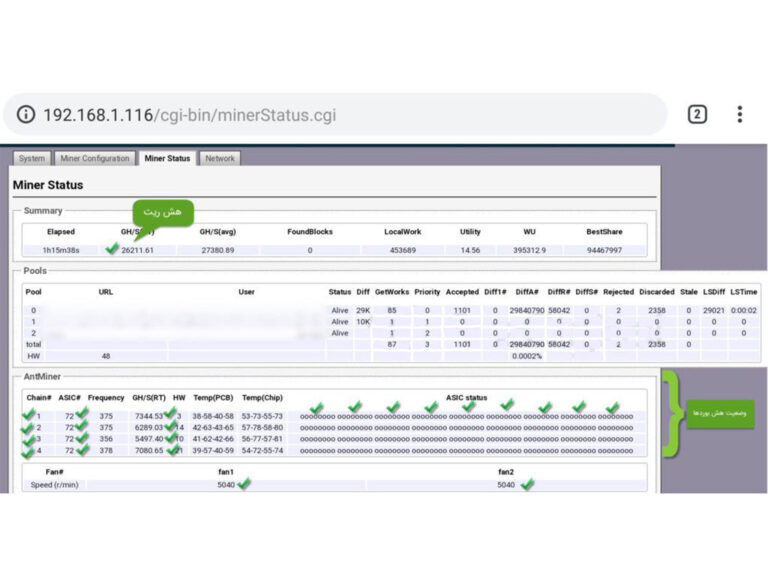
Let’s look at another example, the status page of an Antminer S15:
Conclusion
In this article, we’ve aimed to explain Bitcoin mining as comprehensively yet simply as possible. You’ve likely understood that mining is a method of obtaining Bitcoin without direct purchase, which is why it’s popular among the cryptocurrency community.
Bitcoin mining is a new and nascent industry. Generally, new industries, while offering significant profits, also come with considerable risks. Therefore, although Bitcoin mining can be a highly profitable activity, undertaking it without sufficient research and consideration of the conditions can lead to irreparable losses. To summarize the content of this article, I can highlight the following points:
- Profitable Bitcoin mining today is only feasible with specialized ASIC devices. Mining Bitcoin with regular mobile phones or computers is not cost-effective, as it’s impossible to compete with massive mining farms.
- Mining devices are extremely power-hungry and generate substantial heat. Therefore, in Bitcoin mining operations, you need not only the mining device itself but also adequate electricity, electrical equipment, and cooling systems.
- The best mining device is one with a faster return on investment and is used on an industrial scale.
- You can calculate your mining income using a mining calculator. The mining calculator on the ArzeDigital website can assist you with this.
- Cloud mining (renting hash rate) does not require you to own a mining device. However, be aware that many websites operating under the guise of cloud mining are fraudulent, and this activity carries its own risks, especially in Iran, which is subject to heavy sanctions.
- Legal Bitcoin mining in Iran requires obtaining a license and paying export electricity tariffs. Engaging in mining without the necessary permits may result in heavy fines and legal repercussions.
Similar articles you need to read:
Which Bitcoin Mining Software Offers the Highest Returns
Cloud Mining of Digital Currency; Introduction to Cloud Mining Sites
Introduction to 8 Gold-Backed Cryptocurrencies
The Impact of Gold Production in Chinese Laboratories on the Future of the Global Gold Market
How to Find the Precise Entry Point Using Multi-Time Frame Analysis? | With a Practical Example