Bitcoin Mining with Solar Panels – Is It Profitable?
As concerns about the high energy consumption in cryptocurrency mining, particularly Bitcoin, intensify, this issue has become a primary point of criticism against the mining industry. Furthermore, following the official government regulation on mining activities, serious questions have arisen regarding the use of renewable energy sources, especially solar power. Can utilizing solar panels for cryptocurrency mining be economically viable? In this article, we will thoroughly examine the feasibility of mining with solar energy and analyze its profitability. You can follow the latest finance‑related news on Nima Imani’s website.
Table of Content
- Mining using Renewable Energy
- Solar Power Plants
- Profitability of Solar Mining in Iran
- Conclusion
Mining Using Renewable Energy
Over time, as cryptocurrencies have become more widespread, public interest and awareness about this phenomenon have also grown. Until a few months ago, due to the low cost of electricity in Iran and consequently higher profitability, mining was a hot topic among the public, attracting investments from a broad spectrum of people.
Electricity consumption is one of the most significant factors in calculating mining profitability. Miners must consider not only the cost of mining equipment but also their monthly electricity bills.
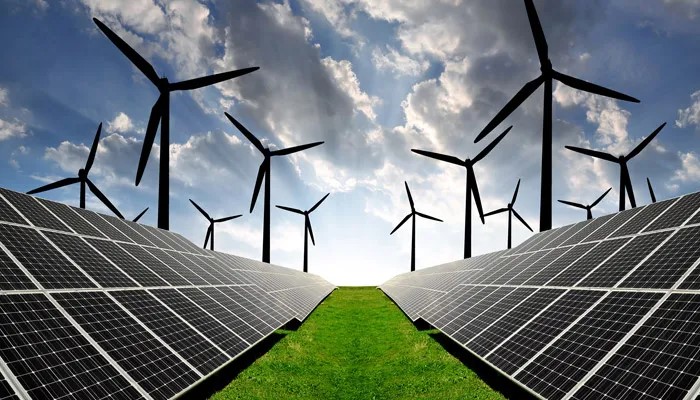
According to a recent report by the research firm CoinShares, approximately 74% of the energy required for Bitcoin mining is sourced from inexpensive renewable energy.
Moreover, most well-known mining countries like China, Iceland, and Canada generate most of their active mining rigs’ electricity from renewable and green sources.
China, a global leader in cryptocurrency mining, utilizes hydroelectric power from its numerous dams for its mining industry. Iceland and other Scandinavian countries, benefiting from affordable energy generated by geothermal activity and their cold climates, are known as mining havens.
A simple search on forums like Bitcointalk or Reddit’s r/bitcoin reveals a vast number of questions such as “Is solar mining profitable?”, “How do I set up my solar panels for mining?”, and similar inquiries.
Additionally, many users share their experiences and plans with other forum members, answering questions from novice miners in this regard.
Our country, thanks to its abundant oil and gas resources, provides relatively inexpensive electricity to its grid subscribers. Despite the fact that electricity tariffs in Iran are lower than in many other countries, mining still remains a costly and risky venture.
The widespread adoption of mining as a means of income has led not only to its expansion on an industrial scale but also to some small-scale miners turning towards setting up solar panels and utilizing solar energy to generate and supply the electricity required for their devices – a practice known as “solar mining.” But is setting up a solar energy generation system economically feasible?
Solar Power Plants
The sun, as an endless source of energy, can be a solution to many energy and environmental problems. Iran, with over 300 sunny days a year across more than two-thirds of its territory and an average solar irradiance of 4.5 to 5.5 kWh/m²/day, is a country with high potential in solar energy.
According to international standards, if the average daily solar irradiance exceeds 3.5 kWh/m² (3500 Wh/m²), the use of solar systems is considered economical and cost-effective.
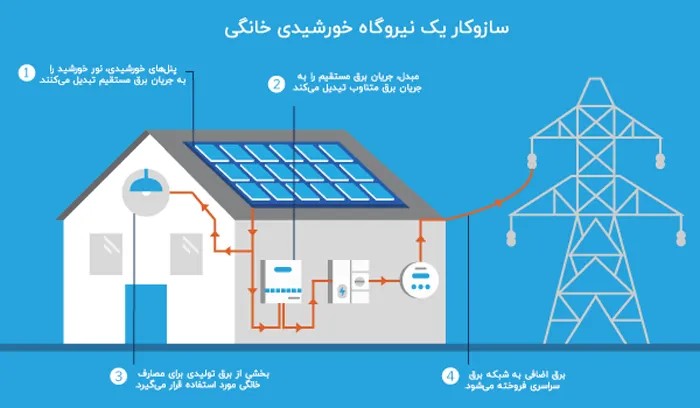
Photovoltaics, or PV for short, is a type of system that generates electricity from sunlight. In this method, solar cells are used to directly convert solar radiation into electricity.
The components of a photovoltaic system include:
- Panel or Solar Cells: These generate voltage and current when exposed to sunlight.
- Inverter: Converts direct current (DC) to alternating current (AC).
- Battery: Stores the power generated by the solar panels.
- Controller: Manages the charging of batteries from the solar panel source.
Solar power systems are divided into two main types: On-Grid and Off-Grid. In an On-Grid system, the electricity generated from solar energy is fed into the national power grid. In an Off-Grid system, the electricity produced by the solar panels is stored in batteries and supplies the user’s required power for their intended purposes.
In cases where mining is not profitable, the generated energy can be used for domestic consumption, and any surplus can be sold to the Iran Renewable Energy and Energy Efficiency Organization (Satba).
Last year, news emerged about the construction of a 20 MW solar farm in Australia for Bitcoin mining. Hadouken, the company behind the project, claimed that this power plant would be used to supply energy for mining activities and a data center in Western Australia.
Furthermore, the cryptocurrency mining company Plouton announced its intention to establish and launch the largest fully solar-powered Bitcoin mining farm in North America soon.
Currently, the electricity purchase rate for On-Grid systems smaller than 20 kW is 800 Tomans per kWh. It is worth noting that the useful lifespan of solar systems is approximately 25 to 30 years.
Profitability of Solar Mining in Iran
According to the mining process regulations approved by the government on August 4th, the electricity tariff for cryptocurrency mining applicants will be calculated and applied at the average official export electricity price, using the NIMA exchange rate determined and announced by the Ministry of Energy. Under these conditions, the electricity cost for miners will increase multiple times compared to before, reducing mining profitability to less than half of its previous state.
Assuming you own three Antminer S9 Bitcoin mining devices, each with a power consumption of 1.32 kW, your total electricity consumption per hour would be approximately 4 kW. If you intend to power your small farm using solar energy, you will have a few options:
- Meet all electricity needs 24/7 using solar energy:
Since Iran experiences an average of 5 to 7 hours of suitable sunlight per day for electricity generation, for your Off-Grid solar system to meet the 24-hour electricity demand, you would need to establish a solar power plant of approximately 20 kW. The estimated cost for this would be around 500 million Tomans.
- Use solar energy only during daylight hours and the national grid for the rest of the day:
(The text cuts off here, but it implies using solar power when available and supplementing with grid power when not.)
To offset some of the electricity costs for the mining devices, you can utilize the power generated by the solar panels during the hours they are producing electricity and rely on the national grid for the remainder of the day. Under these conditions, you can reduce your electricity consumption from the national grid to some extent. A 5 kW home solar power plant would suffice for your needs in this scenario. Setting up and constructing such a system requires 50 to 60 square meters of space (depending on whether the roof is flat or sloped) for installing the solar panels and an initial capital investment of approximately 130 million Tomans for purchasing and installing the equipment.
- Sell the electricity generated by your solar system to the national grid and use the revenue to partially pay your miners’ electricity bills.
The cost of equipment and setting up an On-Grid solar system is lower, approximately half that of an Off-Grid system, making it a more cost-effective option. By investing around 70 million Tomans, setting up a 5 kW power plant, and signing a contract with Satba, you can transfer your generated electricity to the national grid at a rate of 800 Tomans per kWh. Under these conditions, you would receive approximately 800,000 to 1,000,000 Tomans monthly from selling electricity.
If you were to supply the electricity required for your devices from the national grid, your monthly electricity bill would exceed 2 million Tomans. Half of this amount could be covered by selling solar electricity. It is worth noting that the government offers low-interest loans to promote employment and support entrepreneurship for rural and nomadic populations.
Now, let’s calculate the initial capital required for purchasing miners and setting up a solar power supply system, the monthly income, and the investment return period.
The current approximate cost of purchasing 3 Antminer S9 ASIC mining devices is 35 million Tomans. Based on the current price of Bitcoin (as of August 18, 2019) and without considering electricity costs, the approximate monthly income per Antminer S9 device is 1,400,000 Tomans.
Depending on which of the aforementioned options you choose for setting up a solar system, different scenarios will arise. The initial investment return period for each of the options presented above is as follows:
-
Your initial investment, including the cost of purchasing ASIC devices and setting up the solar power plant, will be recouped after 9.5 years, after which you will achieve full profitability.
-
Your initial investment return period will be 5 years.
-
After 5.5 years, all your expenses will be recovered.
Based on the calculations, it can be concluded that mining Bitcoin with solar energy, assuming no changes in network difficulty parameters and Bitcoin price, will take between 5 to 10 years to cover costs and become profitable. This means that after this period, the income from mining or selling electricity to the national grid will offset the costs of purchasing mining devices and setting up the solar system. However, the useful life of mining devices is typically less than this, which is why expecting a return on investment using solar energy might not be feasible.
The following video showcases an example of a home solar mining setup belonging to a Bitcoin miner.
Conclusion
Currently, the use of renewable energy sources such as solar, geothermal, hydro, and wind power for mining, given their setup costs, is more of an environmental preservation effort than an economically advantageous one.
Furthermore, solar power plants, when scaled up, can function as a medium-sized business. As previously mentioned, surplus electricity produced can be sold to the national power distribution grid, generating income. Although a rough calculation indicates that the income from mining using this energy could be more economically viable.
Nevertheless, it can be expected that in the coming years, with decreasing costs of battery and solar panel production, and the use of solar energy for mining, we will witness new mining hubs, and solar mining will emerge as a popular method in parts of the world that lack access to fossil fuels or hydroelectric renewable energy.
Similar articles you need to read:
How Much Oil Do Iran and Middle Eastern Countries Produce, and How Much Do They Earn from It
Today Miner Price in Iran + Guide to Factors Affecting Mining Device Prices
The Disadvantages of Mining Cryptocurrency with a Mobile Phone