Introduction and Comparison of Cryptocurrency Wallet Types
The first, and perhaps most important, step to entering the world of cryptocurrency investment is to become familiar with the different types of wallets. For this reason, we recommend you stay with us until the end of this article.
A cryptocurrency wallet is where your digital currencies are stored, and choosing a secure and reputable wallet requires understanding its various types.
These wallets store your public and private keys and, by connecting to different blockchains, enable you to send and receive cryptocurrencies. To understand better:
- Private Key: This is like your bank account password and should never be shared.
- Public Key: This is like your account number and can be shared with others.
In essence, a cryptocurrency wallet is similar to your physical wallet, with the difference being that it’s not physical. When a Bitcoin is sent to you, ownership is transferred from the sender to you, much like receiving cash, but in the digital world.
Have you had experience using a digital wallet before, or are you just about to enter this fascinating world?
You can follow the latest finance news on the Nima Imani website.
Table of Contents
- Before introducing types of cryptocurrency wallets, let’s examine some points regarding their selection.
- Categorization of Cryptocurrency Wallet Types
- Software Cryptocurrency Wallets
- Web-based Software Cryptocurrency Wallets
- Mobile Software Cryptocurrency Wallets
- Desktop Software Cryptocurrency Wallets
- Hardware Wallets
- Paper Wallets
- Mental Wallets
- Hot Wallets
- Cold Wallets
- Custodial Wallets
- Non-Custodial Wallets
- Two Frequently Used Terms in the World of Cryptocurrency Wallets
- Best Bitcoin Wallets
- Trust Wallet (Mobile): Best Option for Beginners
- Ledger (Hardware): Most Secure Option
- Mycelium (Mobile)
- BlueWallet (Mobile)
- Electrum (Desktop & Mobile): Best Option for Professionals
- Exodus (Desktop & Mobile)
- Bitcoin Wallet (Mobile)
- Blockchain.com Wallet (Web-based)
- SafePal (Mobile & Hardware)
- Atomic Wallet (Mobile)
- Coinbase Wallet (Mobile)
- Wasabi Wallet (Mobile)
- Trezor (Hardware)
- KeepKey (Hardware)
- BitBox (Hardware)
- Conclusion
Before Introducing Types of Cryptocurrency Wallets, Let’s Examine Some Points Regarding Their Selection:
- Some wallets support dozens of coins, while others are single-coin wallets.
- Install wallets from reputable and official websites, and be wary of fake extensions.
- Choose your wallet based on how frequently you intend to use it. For example, if you plan to trade daily, use online wallets that offer easier connectivity.
- Never share your password or PIN with anyone, not even the wallet’s support team! (Don’t say you weren’t warned).
- Always keep your wallet and your device’s antivirus software updated.
Categorization of Cryptocurrency Wallet Types (Cryptocurrency Wallets)
Types of Cryptocurrency Wallets by Device Type:
- Software Wallets (Web-based / Mobile / Desktop)
- Hardware Wallets
- Paper Wallets
- Mental Wallets
Types of Cryptocurrency Wallets by Internet Connection Method:
- Hot Wallets
- Cold Wallets
Types of Cryptocurrency Wallets by Custody:
- Custodial Wallets
- Non-Custodial Wallets
Software Cryptocurrency Wallet
These are applications installed on mobile phones or computers that store information and private keys online and connect to the Bitcoin network through centralized services such as centralized exchanges. Their security is ensured through passwords and recovery phrases. Almost everyone engaged in small-scale cryptocurrency trading uses these wallets. Overall, they are suitable for long‑distance transactions.
Web‑Based Software Cryptocurrency Wallet
As the name suggests, this type of wallet does not require downloading or installation. Some of its advantages include transferring funds through any device and storing transaction history on a central server. Sending cryptocurrency to another person is also very simple and convenient. By scanning the QR code associated with digital currency receiving addresses or simply selecting the copy option, you can easily access these addresses.
However, its low security can be problematic, and in some cases, you may not be able to control your own private keys. Since this wallet is stored in the cloud, it can be accessed from any device and at any location. The user only needs a username and password and does not deal with private keys or recovery phrases.
Mobile Software Cryptocurrency Wallet
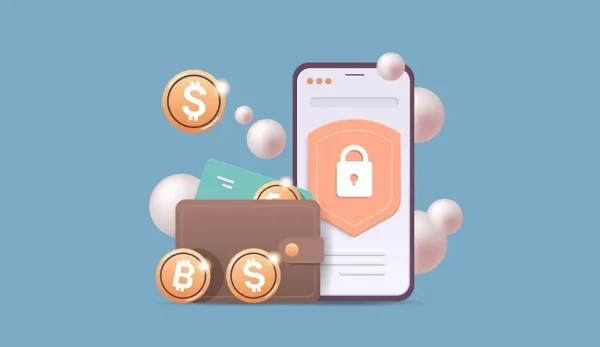
This is an application installed on a mobile phone and is widely used due to easy access to smartphones, making it the most commonly used wallet. In this type of wallet, users can not only store digital assets easily but also use them for everyday purchases in places that support cryptocurrencies.
Because this wallet is online, it is not highly secure, and if the phone is stolen, the wallet is at risk. To ensure security, always keep the app updated. An important advantage of this wallet is its ability to scan QR codes with the phone’s camera, eliminating the possibility of errors when copying addresses.

Desktop Software Cryptocurrency Wallet
This wallet is installed on Windows or Linux, and its security and convenience make it popular (you just need to make sure your device isn’t hacked). This wallet allows full control over your digital assets through public or private keys. Viewing charts on a laptop or desktop monitor is much easier than on mobile, which is why professional traders prefer this type of wallet.
Hardware Wallets
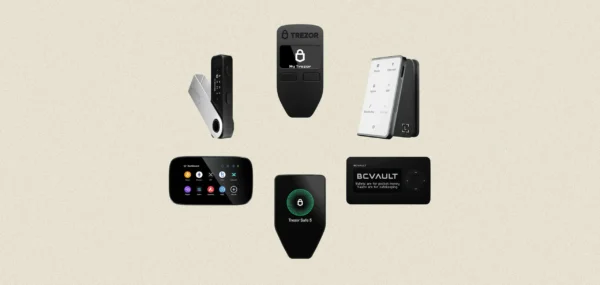
This is a small metal device similar to a flash drive that uses a random number generator (RNG) to generate public and private keys. Since it is not connected to the internet, hacking is not possible.
These wallets are not free, but considering the high level of security they provide, they are worth the cost. Private keys never leave the device, and no one except you can access them. Using this wallet is more complex, and if you trade daily, it’s better to use online wallets.
To perform a transaction with a hardware wallet, you need a computer or the manufacturer’s software to confirm (or sign) the transaction. The device only connects to the internet when transferring funds. In practice, it displays the private‑key QR code for scanning and creating transactions in a mobile wallet.
Paper Wallets
This wallet can be easily created by printing a QR code that contains your address and private key. As expected, this wallet is offline, and its paper nature makes it impossible to hack. However, because paper can be lost or damaged easily, it is not widely used today.
When you need to transfer funds, simply scan the printed QR code. The “BitAddress” website is commonly used to create paper wallets. Continuous daily trading or payments with this wallet is difficult, but it is suitable for storing a large portion of your long‑term holdings.
Brain Wallets
In this type of wallet, the private key is stored in the user’s memory as a recovery phrase consisting of a sequence of 12 to 14 words. It is essentially similar to a paper wallet but stored mentally instead of physically. However, if you don’t have a strong memory, this wallet is not recommended.
Hot Wallets
These wallets include software wallets. They offer easy setup and high speed, making them suitable for active traders. These wallets are usually connected to the internet and prone to hacking, so you should not store all your assets in them — only the portion you intend to trade.
In general, a wallet is considered hot if it can access the internet directly and is located on a device that remains connected to the internet.
Wherever you are, you can easily access this wallet with an internet connection, and recovering private keys in case you lose them is easier than with cold wallets. However, private keys in hot wallets are stored on third‑party servers, making them less secure compared to cold wallets.
Cold Wallets
Cold wallets include hardware wallets. These wallets have no connection to the internet, which gives them higher and stronger security. This type of wallet is suitable for long‑term storage of Bitcoin or other cryptocurrencies by investors. In professional trading, the main capital remains in a cold wallet, and only a portion intended for trading is transferred to a hot wallet.
The most popular cold wallets are supported by hot wallets. Transactions in this type of wallet take longer to complete, and if you lose your keys without having them backed up, recovery is impossible.
Custodial Wallets
Custodial wallets, or escrow wallets, are controlled by a trusted entity. They hold the users’ private keys and provide users with a username and password, which can be easily reset by requesting password recovery if forgotten. A new password will then be sent to your email.
Since there is no concern about losing private keys, many people prefer these wallets. However, the risk remains that the third party holding your assets could be hacked.
These wallets offer easy and fast operation, especially for trading, and most users prefer trading cryptocurrency on centralized exchanges (which use custodial wallets) rather than decentralized ones (which require connecting to a non‑custodial wallet).
Non‑Custodial Wallets
In this type of wallet, control of the private keys is entirely the responsibility of the user. This may seem risky since if you forget your keys, there is no way to recover them.
However, since nothing is stored on a third‑party server, hacking risks are significantly reduced. When you control your own assets, no one can freeze them, while in custodial wallets, assets can be frozen under certain conditions, such as sanctions.
Two Common Terms in the World of Cryptocurrency Wallets
Multisignature Cryptocurrency Wallet
A unique type of wallet that requires two or more private keys to access or authorize a transaction. Before any transfer, all users involved in creating the wallet must approve the transaction. This type of wallet is a suitable option for families or companies.
Multi‑Currency Cryptocurrency Wallet
Some wallets support multiple cryptocurrencies, while others support only one. Some even allow you to convert one cryptocurrency to another through a third‑party service called ShapeShift. If your multi‑currency wallet cannot perform such conversions internally, you must transfer your assets outside the wallet and convert them elsewhere.
What Is the Best Bitcoin Wallet?
Which wallet is best completely depends on the user’s situation. Each person’s ideal wallet varies according to their knowledge level, tools needed, and amount of investment. For example, a beginner typically needs a wallet that is easy to use and supports a wide range of cryptocurrencies. However, for someone who is more experienced and needs advanced Bitcoin management features, the user interface or support for other cryptocurrencies is not a major concern.
For example, an individual who does not own a personal computer will use mobile wallets, while someone without a smartphone will rely on wallet types other than mobile ones.
Best Bitcoin Wallets
Although more than a hundred wallets with various names exist for Bitcoin, in this article I introduce 15 wallets that, in the view of Arzdigital’s content team, are the best Bitcoin wallets for storing and holding Bitcoin in 2025:
| Name | Type |
|---|---|
| Trust Wallet | Software, Mobile |
| Ledger | Hardware |
| Mycelium | Software, Mobile |
| BlueWallet | Software, Mobile |
| Electrum | Software, Desktop & Mobile |
| Exodus | Software, Desktop & Mobile |
| Bitcoin Wallet | Software, Mobile |
| Blockchain.com Wallet | Web-based |
| SafePal | Software & Hardware |
| Atomic Wallet | Software, Mobile |
| Coinbase Wallet | Software, Mobile |
| Wasabi | Software, Mobile |
| Trezor | Hardware |
| KeepKey | Hardware |
| BitBox | Hardware |
• Trust Wallet (Mobile): The best option for beginners
• Ledger Wallet (Hardware): The most secure option
• Mycelium Wallet (Mobile)
• BlueWallet (Mobile)
• Electrum Wallet (Desktop & Mobile): The best option for professionals
• Exodus Wallet (Desktop & Mobile)
• Bitcoin Wallet (Mobile)
• Blockchain.com Wallet (Web-based)
• SafePal Wallet (Mobile & Hardware)
• Atomic Wallet (Mobile)
• Coinbase Wallet (Mobile)
• Wasabi Wallet (Mobile)
• Trezor Wallet (Hardware)
• KeepKey Wallet (Hardware)
• BitBox Wallet (Hardware)
In preparing this list, important criteria such as security, number of installations, diverse features, and user feedback have been taken into account.
These wallets store private keys (assets) on the device or in a physical environment, and no one except the user has access to these assets. In fact, the introduced wallets are non‑custodial, meaning there is no risk of sanctions or funds being frozen.
1. Trust Wallet
Trust Wallet is, without exaggeration, one of the best Bitcoin wallets—especially for beginners.
This completely free wallet, available for Android and iOS, is owned by the world’s largest cryptocurrency exchange: Binance.
However, the software stores private keys on the user’s device, ensuring that neither Binance nor anyone else besides the user can access the assets.
Trust Wallet, which supports thousands of coins and tokens in addition to Bitcoin, has earned the title of the most popular crypto wallet with more than 50 million installs and a 4.5 rating on Google Play.
This wallet supports all essential security features expected from a secure crypto wallet, such as password protection, PIN, backup, fingerprint lock, and face lock.
Strengths
• Exceptional security
• Easy‑to‑use interface
• Supports thousands of coins and tokens
Weaknesses
• Only available on mobile

2. Ledger Hardware Wallet
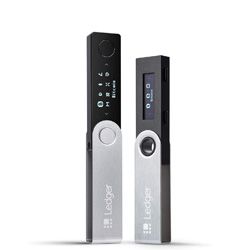
One of the most reliable options for storing Bitcoin is a hardware wallet, and currently, the French company Ledger is the largest manufacturer of this type of wallet.
Ledger hardware wallets store private keys in a highly secure, offline environment, offering more layers of protection compared to software wallets.
The Ledger Nano S model is considered the company’s most famous product, which has proven its security over many years.
This wallet costs around $60, making it one of the more affordable choices among all hardware wallets, and it can also be purchased from reputable Iranian stores.
A newer version called “Nano S Plus” has recently been released. Although it functions similarly to the Nano S, it provides additional features for better transaction management.
The more advanced model, the “Nano X,” offers more capabilities, including a better display, stronger Bluetooth connectivity, and a larger battery. It’s worth noting that all Ledger models are almost identical in terms of hardware security, but their features differ.
Ledger wallets support nearly all reputable cryptocurrencies, along with thousands of tokens (such as those on Ethereum, EOS, NEM, etc.). Therefore, they are suitable for storing most digital assets.
Strengths
• Holds the CSPN security certificate (Level 1 security certification) from ANSSI
• Very high security
• Supports a wide range of cryptocurrencies
• Strong development and support team
Weaknesses
• Not convenient for everyday use
3. Mycelium Wallet
Mycelium is one of the best mobile wallets for storing Bitcoin, available for both major platforms: Android and iOS.
Although Mycelium’s interface is not as modern or user‑friendly as newer wallets, it can confidently be considered one of the most secure and professional Bitcoin wallets. It now also supports Ethereum and Ethereum‑based tokens.
Mycelium can be used to connect to hardware wallets as well. It is also widely used for spending and transferring funds stored in paper wallets.
In Mycelium, the user maintains full control over private keys and assets, and various security options—including PIN protection—are provided.
Strengths
• Strong security
• Extensive additional features
• Ability to connect to hardware wallets
• Ability to spend from paper wallets
Weaknesses
• Mobile‑only
• Weak user interface, not ideal for beginners

4. BlueWallet
The rapid growth in installs of BlueWallet and the expansion of the Bitcoin Lightning Network in the past two years led to this application being included in our list.
BlueWallet is a mobile app for Android and iOS that supports only Bitcoin.
Although supporting just one cryptocurrency may seem like a major drawback, BlueWallet offers advanced Bitcoin‑specific features that are not typically found in multi‑asset wallets. One of its key advantages is its support for the Lightning Network.
The wallet is fully open‑source and gives complete control of private keys to the user. Unlike many advanced wallets with complex interfaces, BlueWallet is also easy for beginners to use. Therefore, if you are looking for a professional Bitcoin wallet with a user‑friendly interface, BlueWallet can be a great choice.
Strengths
• Exceptional security
• Advanced Bitcoin management features
• Easy‑to‑use interface
• Open‑source
Weaknesses
• Supports only Bitcoin
• Mobile‑only
5. Electrum Wallet
If you are not a beginner and have some technical knowledge about Bitcoin, Electrum could be the best option for you.
Electrum is one of the oldest Bitcoin wallets and is considered a popular choice among “Bitcoiners” (Bitcoin enthusiasts). This entirely open-source wallet was developed in 2011 and is continuously updated by its developer community.
Electrum is available for both desktop and Android. However, only the desktop version offers special and advanced features, and installing the mobile version is not particularly recommended.
I reiterate: if you are a beginner, using the Electrum wallet is not advised, as its user interface is not beginner-friendly. Electrum offers users significant control, including features like transaction signing, offline transactions, and customizable fees.
Although its capabilities are comparable to a full Bitcoin node, it occupies very little computer space, and you do not need to download the entire Bitcoin blockchain to use it. The desktop version of Electrum has been developed for Windows, Linux, and Mac operating systems.
Strengths
• Abundant security
• Open-source
• Extensive features for managing funds and transactions
Weaknesses
• Not suitable for beginner users

6. Exodus Wallet
“Security combined with an attractive user interface.” This is a brief description of Exodus in a nutshell.
Exodus is one of the long-standing wallets available for digital currencies, serving crypto users since 2015.
Initially, this software was only available for personal computers. However, it can now be installed on two popular mobile operating systems: Android and iOS. Besides supporting over 100 coins and tokens, Exodus’s beautiful user interface is unique in its class.
Exodus has blocked access for users with Iranian IP addresses in its Windows application. To use it, you need to change your IP. Another important point is that the wallet stores private keys directly on the device. Therefore, despite user concerns, Exodus cannot access or block their assets.
Strengths
• Satisfactory security
• Beautiful and easy‑to‑use interface
• Supports hundreds of coins and tokens
• Installable on mobile and desktop
Weaknesses
• Not open-source
• Blocks Iranian IP addresses

7. Bitcoin Wallet
The “Bitcoin Wallet” is one of the earliest mobile Bitcoin wallets, released in 2013.
This wallet does not have the complexities of some other wallets like Mycelium, and its user interface is designed very simply. However, it is currently only available for the Android operating system.
As the name suggests, Bitcoin Wallet exclusively supports Bitcoin. While it doesn’t offer a plethora of security features, its open-source nature, support for various Bitcoin address types (SegWit and Legacy), and PIN registration capability secure its place among the best Bitcoin wallets.
Backing up this wallet is straightforward. However, unlike most wallets that provide a 12 or 24‑word phrase for backup (BIP39), the backup method in Bitcoin Wallet is slightly different. Instead of words, the user receives a file that allows them to recover their assets if the wallet is deleted.
Strengths
• Satisfactory security
• Easy‑to‑use interface
• Open‑source
Weaknesses
• Only released for Android
• Does not support 12 or 24‑word backup (BIP39)
8. Blockchain.com Wallet
The Blockchain.com wallet is one of the prominent and long‑standing Bitcoin wallets. Besides Bitcoin, it supports several other cryptocurrencies, including Ethereum, Tether, Bitcoin Cash, and Stellar.
Although this is a web‑based wallet and stores private keys on internet servers, the developing company has demonstrated that, due to the encryption of private keys and passwords, they cannot access the assets.
If I were to mention its weaknesses, I would point to the weak reminder system for users to create backups. If users forget their password and haven’t backed up their wallet, they will never be able to access their assets again.Blockchain.com also offers a mobile app, providing a more convenient user experience.
Strengths
• Exemplary security
• Easy access from all devices with just a browser
• Mobile app available
Weaknesses
• Private keys are stored online
• Weak reminder for backup creation

9. SafePal Wallet
SafePal is a wallet released in 2018 that quickly gained significant popularity. Its user‑friendly interface is simple enough for beginners yet powerful enough for advanced users.
One interesting aspect of SafePal is that, in addition to its highly popular software version, it also offers web‑based and hardware versions. It’s worth noting that SafePal is the first and only crypto wallet in which Binance Labs (the venture capital arm of Binance) has invested.
SafePal now has more than 7 million users worldwide across its software, web, and hardware versions. All these users ultimately manage their assets through the SafePal application. At the time of writing this article, SafePal supports 15 languages and 54 blockchains, and this number continues to grow.
Strengths
• High security
• Supports software, web, and hardware versions
• Cross‑chain swaps and spot trading
• Ability to buy cryptocurrency using credit and debit cards
• Supports thousands of coins and tokens
• Ability to store NFTs
Weaknesses
• Some concerns exist regarding the security of the SafePal hardware wallet

10. Atomic Wallet
Atomic Wallet is, in many ways, an excellent crypto wallet and checks many of the boxes users look for. This popular software wallet is available on Windows, Mac, iOS, and Android.
Atomic Wallet supports thousands of tokens across various networks, including Bitcoin, Ethereum, Cardano, Solana, and Binance Smart Chain. Users can also manually add new tokens if they have the token’s smart contract address.
The Atomic Wallet portfolio dashboard is visually appealing and user-friendly. It shows the cryptocurrencies you hold and the USD value of your investments. Another practical feature is staking for Proof‑of‑Stake cryptocurrencies (including Cardano, Tron, Cosmos, and NEAR). Annual yields range from 5% to 22%.
However, one of the most significant negative events involving Atomic Wallet was the June 2023 hack, which resulted in $35 million in losses. At least 5,500 crypto accounts on the platform were affected. According to the team, only 0.1% of all users were impacted.
Strengths
• Supports thousands of coins and tokens
• Ability to manually add tokens using their smart contract address
• Free to download and use
• Staking capabilities with annual yields of up to 22%
• Supports a wide range of devices, including smartphones and computers
• Private keys are fully controlled by the user, and no third party can access digital assets
Weaknesses
• Buying crypto with credit or debit cards requires a 2% fee (plus a $10 minimum)
• No browser extension version
• Limited security controls (and its security was questioned after the 2023 hack)

11. Coinbase Wallet
Coinbase Wallet is the software wallet developed by the well‑known Coinbase exchange. As you likely know, Coinbase is a US‑based exchange with mandatory identity verification and restrictions that prevent Iranian users from accessing its services. However, these restrictions do not apply to the wallet because it is non‑custodial and requires no identity verification.
Coinbase Wallet supports a wide range of cryptocurrencies. Other features—such as staking tools and direct purchasing—are available within the wallet, but Iranian users cannot use these options due to their connection to the exchange.
Overall, the biggest advantage of Coinbase Wallet for non‑Iranian users is its connection to the Coinbase exchange, which simplifies transactions. However, this benefit does not apply to Iranian users. That said, Coinbase Wallet can still function as a standard software wallet.
Strengths
• Easy transfers to and from Coinbase, the largest US crypto exchange (not applicable for Iranian users)
• Supports a wide range of cryptocurrencies
• Features such as staking tools and NFT marketplaces (not applicable for Iranian users)
Weaknesses
• Does not have a desktop version

12. Wasabi Wallet
Wasabi Wallet is exclusively for Bitcoin; it does not support any other digital currency. This wallet is known for its strong focus on security features.
Launched in 2018 by the zkSNACKS team as a secure, open-source Bitcoin wallet, Wasabi is available as desktop software for Windows, Mac, and Linux.
Wasabi supports CoinJoin transactions. CoinJoin is a privacy-enhancing mechanism that prevents tracing the link between transaction inputs and outputs, effectively obscuring which address initiated a transaction.
Strengths
• Supports CoinJoin
• Enhanced security through Tor integration
• Free and open-source
Weaknesses
• Supports only one digital currency (Bitcoin)
• No mobile version

13. Trezor Hardware Wallet
Trezor, headquartered in the Czech Republic, is the first company to create hardware wallets for Bitcoin for the general public.
Similar to Ledger, Trezor produces highly secure hardware wallets but has lower sales and popularity compared to Ledger.
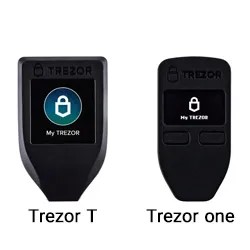
The most famous product from Trezor is the Trezor One. However, a newer product, the Trezor Model T, has since been released.
While the two products offer similar security levels, the Model T boasts additional features. Moreover, the Model One does not support Ripple and a few other cryptocurrencies, whereas the Model T covers these as well. The Trezor One is priced at approximately 59,andtheModelTcostsaround59, and the Model T costs around 192.
Like Ledger, Trezor hardware wallets store private keys securely and offline. If users adhere to certain security protocols, hacking them is nearly impossible.
Strengths
• Abundant security
• Supports over a thousand coins and tokens (Model One does not support Ripple and some other cryptocurrencies)
• Can synchronize with numerous wallet software
• Suitable size and weight
Weaknesses
• Not suitable for everyday use
• Weak casing on the Model One
14. KeepKey Hardware Wallet
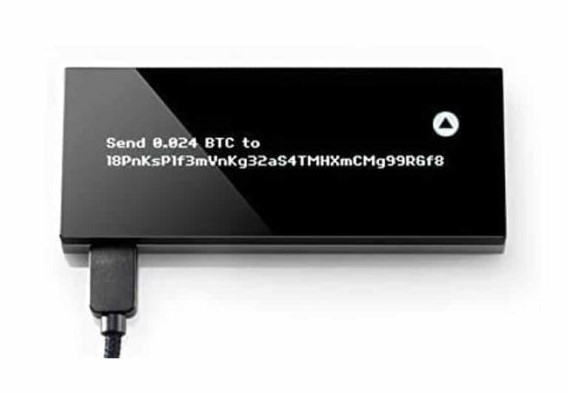
KeepKey is another popular hardware wallet available today and can be purchased in Iran. This device works via USB and can be connected to Windows, Mac, Linux, and Android devices. KeepKey supports approximately 40 digital currencies.
KeepKey was developed and launched by ShapeShift. Initially, this wallet was priced much higher, selling for around 240.However,atthetimeofthisreport,itspriceonAmazonis240. However, at the time of this report, its price on Amazon is 49.
Like other hardware wallets, security is KeepKey’s primary feature. In addition to private keys protecting user assets, this wallet also has a dedicated PIN code on the device. Transaction speeds on KeepKey are customizable, and you can generate an unlimited number of addresses.
Strengths
• High security
• Easy to use
• Reasonable price
Weaknesses
• Supports only 40 digital currencies
• Relatively heavy weight
15. BitBox Hardware Wallet
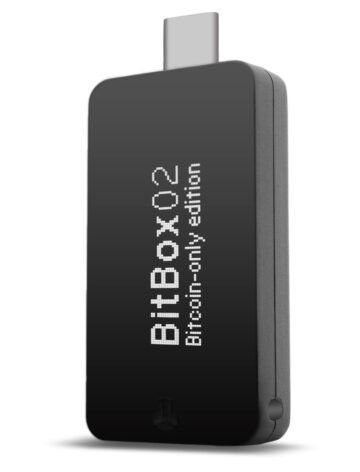
The final wallet mentioned in this article on the best Bitcoin wallets is BitBox. BitBox also falls into the hardware wallet category. It has two models: BitBox01 and BitBox02, with the latter being the newer version.
The BitBox02 features an OLED display and is generally smaller than most other hardware wallets. Another distinguishing feature is its USB-C cable, allowing direct connection to most modern computers and smartphones.
Overall, the BitBox interface is simple, but advanced settings can be enabled. By default, BitBox does not support all altcoins. If you intend to send or receive ERC20 tokens through this wallet, you must first manually enable them in the settings.
Another interesting feature of BitBox is its touch sensors. Unlike most hardware wallets, BitBox has sensors on its edges that serve different purposes. For example, regular taps on these areas are used for selection, while firmer taps are for confirmation. While initially challenging, you’ll quickly find the touch interface enjoyable.
BitBox02 comes in two editions: one exclusively supports Bitcoin (marked as “Bitcoin-only edition”) and is cheaper. The other edition supports various other coins and tokens. At the time of writing, this model is available on Amazon for $68.
Strengths
• High security
• Has software versions (desktop and mobile)
• Supports DeFi
• Easy to use
Weaknesses
• Relatively high price (compared to other devices)
• No iOS support
• Limited number of supported assets
Final Word
Each available wallet has its advantages and disadvantages. You should choose the most suitable one based on your specific needs and preferences. Selecting the right wallet is a crucial step for beginning your journey in this field.
Similar articles you need to read:
Complete Crypto Terminology Dictionary 2026
What is the Best Trading Timeframe? Understanding Timeframe Differences