Comparison of Nobitex and Wallex Exchanges for Iranians: Which One is Better?
Choosing a good cryptocurrency exchange is the first and most crucial step towards entering the world of crypto securely and professionally. Given the recent limitations faced by Iranian users on international exchanges, domestic platforms have become the primary choice for traders. Among these, Nobitex and Wallex, two of the most powerful and popular options, are in a close competition. Nobitex, with its distinguished history, and Wallex, with its innovative approach, each have their own unique set of advantages and disadvantages. In this article, we will compare these two exchanges impartially and in detail from all aspects to help you make the best choice. Stay with Nima Imani’s website.
Table of Content
- Introduction to Nobitex and Wallex Exchanges
- Market Volume and Liquidity
- Number and Variety of Cryptocurrencies
- Trading, Deposit/Withdrawal Fees
- Order Execution and Settlement Speed
- Security and Identity Verification (KYC)
- Customer Support
- User Interface and User Experience (UI/UX)
- Trading Tools and Features (Limit, Stop-loss, etc.)
- Methods for Rial Deposits and Withdrawals
- Network Fees and Costs
- Brand History and Reputation
- Insurance or Asset Protection Conditions
- API and Developer Support
- OTC Trading and Over-the-Counter Markets
- Exchange Limitations and Regulations
- Order Book Depth (Liquidity)
- Support for Stablecoins
- Reporting and Transaction History
- User Structure (Web/Mobile)
- Conclusion
Introduction to Nobitex and Wallex Exchanges
Both Nobitex and Wallex are among the most reputable Iranian exchanges, striving to cater to the needs of both beginner and professional users by offering diverse services. Nobitex began its operations in 2017 (1396) and, with over 10 million users, has become a giant in the industry. On the other hand, Wallex, founded in 2018 (1397) by graduates of Sharif University of Technology and Tehran University, has carved out a special niche among professional traders due to its particular focus on advanced trading tools. In the following sections, we will examine these two platforms across twenty-one key aspects.

Ali Khooei, CEO of Nobitex Exchange

Amin Amini, Co-founder of Wallex Exchange
Market Volume and Liquidity
High liquidity is one of the most critical factors for conducting fast and low‑cost trades. In markets with adequate liquidity, orders are executed with minimal price difference (spread) and without delay. Below, we compare the liquidity status of Iran’s two largest exchanges.
Nobitex: Abundant Liquidity for High‑Volume Trades
With over 10 million users, Nobitex is Iran’s largest exchange in terms of user base and trading volume. This large scale brings the following advantages:
High Market Depth: There is an abundance of buy and sell orders at various price levels in the Order Book. This feature is vital for traders moving large volumes of a currency (e.g., several Bitcoins) as their large orders do not cause significant price slippage.
Variety of Liquid Pairs: From major pairs like Bitcoin/Toman and Tether/Toman to popular altcoins, all have sufficient liquidity. This variety allows traders to implement diverse strategies without worrying about being stuck in a stagnant market.
Order Matching Speed: On Nobitex, orders are completed almost instantaneously due to the high number of market participants, a key advantage for short‑term scalpers.
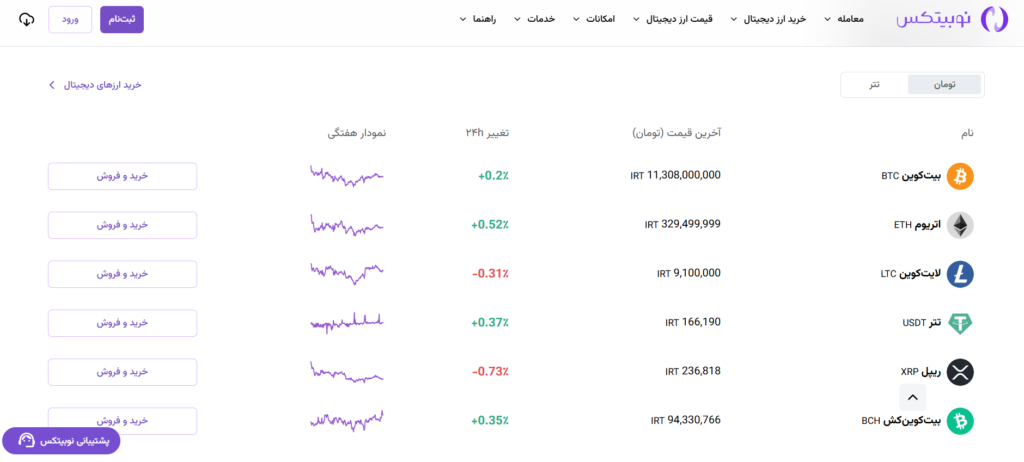
Wallex: Targeted Liquidity with Competitive Spreads
Wallex, with over 3 million users, may be smaller in terms of user numbers, but by focusing on liquidity quality, it has managed to create a desirable trading experience:
- Focus on Major Pairs: Wallex concentrates its resources on popular pairs such as Bitcoin/Toman and Tether/Toman. In these pairs, the market depth is sufficient for retail and mid-level traders to buy and sell with minimal cost.
- Competitive Spreads: One of Wallex’s strengths is maintaining low spreads (the difference between buy and sell prices) in major markets. This means traders pay less hidden cost with each buy or sell transaction.
- Execution Quality Over Quantity: By optimizing its order book and managing market makers, Wallex strives to provide high-quality liquidity where orders are executed without disruptions in pricing.
Number and Variety of Cryptocurrencies
The variety of tradable cryptocurrencies is an important criterion for investors seeking a broader portfolio. The more supported currencies there are, the more users can have a diverse investment portfolio without needing multiple exchanges. In this section, we will examine the approach of two exchanges, Nobitex and Wallex, in terms of cryptocurrency variety.
Wallex: Maximum Variety for Market Explorers
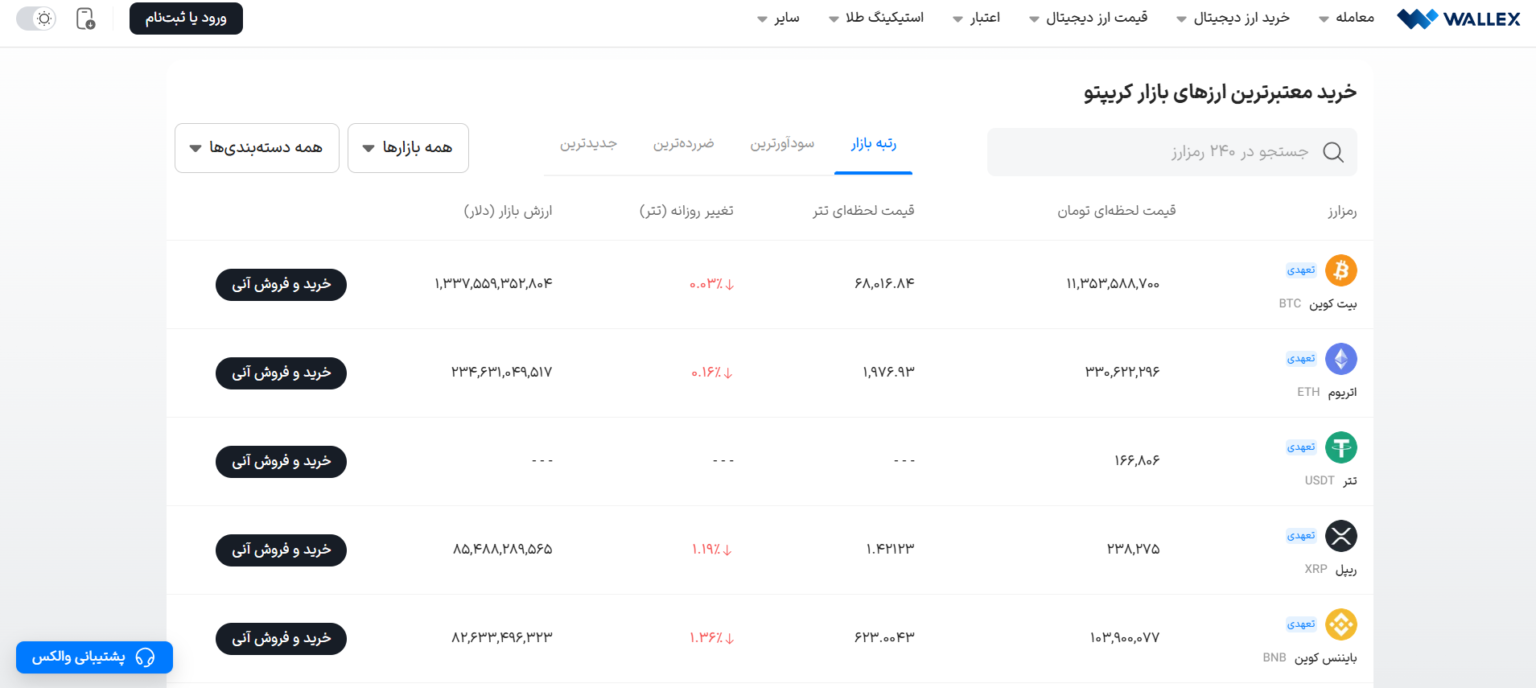
Supporting over 290 cryptocurrencies, Wallex is considered one of the most diverse Iranian exchanges. This high variety offers the following advantages:
- Access to More Altcoins: If you are looking to invest in emerging projects, memecoins, or specific tokens from various ecosystems (such as Layer 2 blockchains, crypto games, or DeFi), Wallex offers more options. This means you don’t need to visit other exchanges to trade a specific cryptocurrency.
- Flexibility in Investment Strategy: With a wide range of cryptocurrencies, you can implement diverse strategies, such as investing in low-value tokens with high growth potential (high risk, high potential return) alongside major currencies.
- Covering Specific Needs: Some users may be looking to trade cryptocurrencies not available on other exchanges. Wallex covers this need with its extensive list.
However, it’s important to note that high variety doesn’t always mean high liquidity for all cryptocurrencies. Some altcoins available on Wallex may have lower trading volumes, which you should consider in your transactions.
You can see the variety of cryptocurrencies on Wallex in the image below.
Nobitex: Focus on Credibility and Security in Cryptocurrency Selection
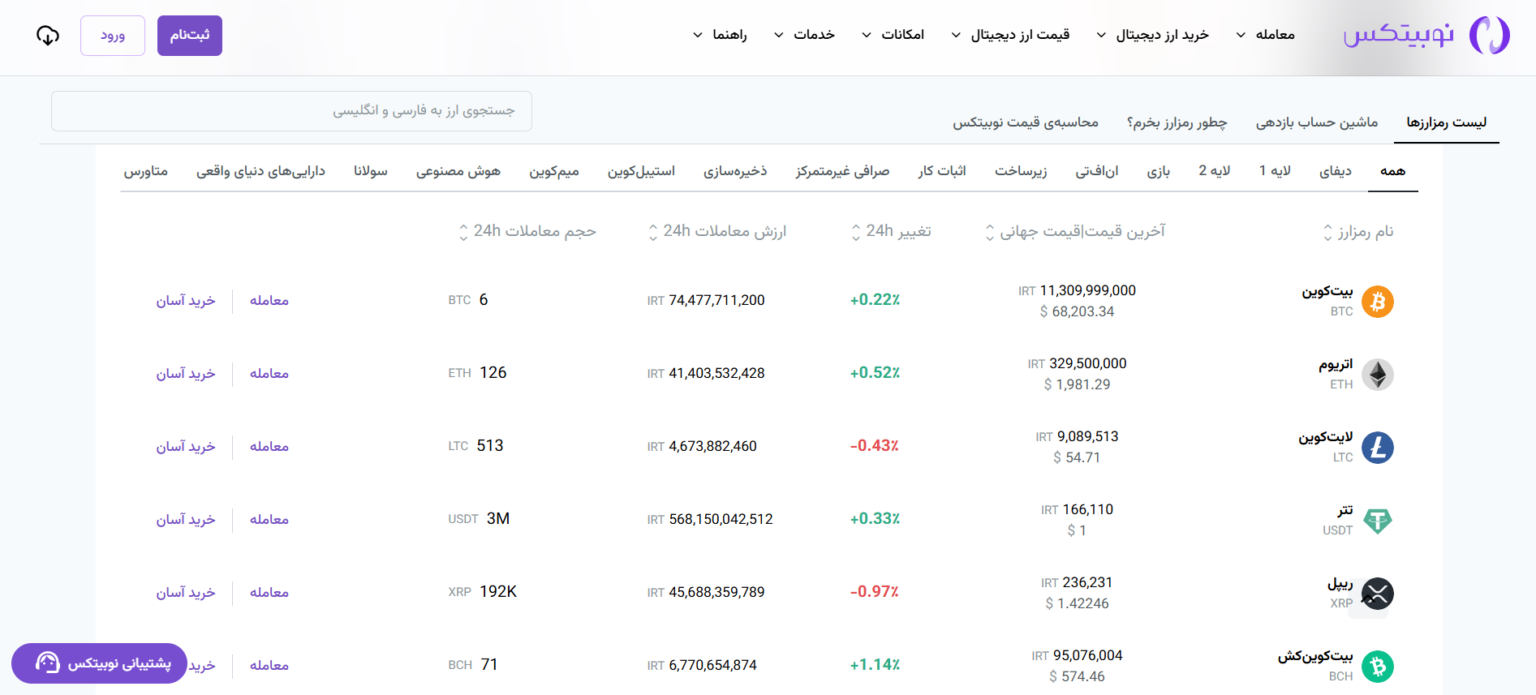
Nobitex, supporting around 148 cryptocurrencies, has adopted a more conservative approach. This exchange focuses on the main, credible, and more stable assets in the market. This strategy has the following advantages:
- Reduced Selection Risk: Nobitex typically lists cryptocurrencies that have sufficient credibility and history from a technical team, user community, and project perspective. This means Nobitex users are less exposed to scam cryptocurrencies or very weak projects.
- Concentrated Liquidity: Instead of spreading liquidity across a large number of low-volume cryptocurrencies, liquidity on Nobitex is concentrated on those 148 cryptocurrencies. This ensures that even the altcoins available on Nobitex have a relatively good market depth.
- Ease of Choice for New Users: For investors new to the market, Nobitex’s limited and selected number of cryptocurrencies can be an advantage. They are not faced with a massive volume of unknown options and can focus on the well-known main currencies.
You can see the variety of cryptocurrencies on Nobitex in the image below.
Comparison Table: Number and Variety of Cryptocurrencies on Nobitex vs. Wallex
| Criterion | Value (Nobitex | Wallex) | Description |
|---|---|---|
| Number of Cryptocurrencies | Nobitex: Approx. 148 (Limited & Focused Selection) | Wallex: Over 290 (High Variety) | Wallex offers significantly higher variety, suitable for accessing diverse altcoins, while Nobitex focuses on major currencies. |
| Approach | Nobitex: Focus on major and stable coins | Wallex: Broad market coverage and emerging projects | Nobitex is more conservative, listing reputable currencies; Wallex aims to cover new and emerging projects. |
| Target Audience | Nobitex: Conservative investors, beginners, and enthusiasts of major coins | Wallex: Explorers, altcoin traders, and new project followers | Nobitex is suitable for users seeking security and simplicity; Wallex is a better choice for those wanting to explore diverse projects. |
Trading Fees and Deposit/Withdrawal Charges
The fee structure is one of the most significant factors influencing trading profitability, especially for active traders. Both Nobitex and Wallex use a tiered fee system that decreases based on users’ 30-day trading volume. Below, we examine the fee details on these two platforms.
Nobitex: Transparency and High-Tier Discounts
Nobitex has a transparent, tiered fee structure that differs between Toman and Tether markets.
- Trading Fees
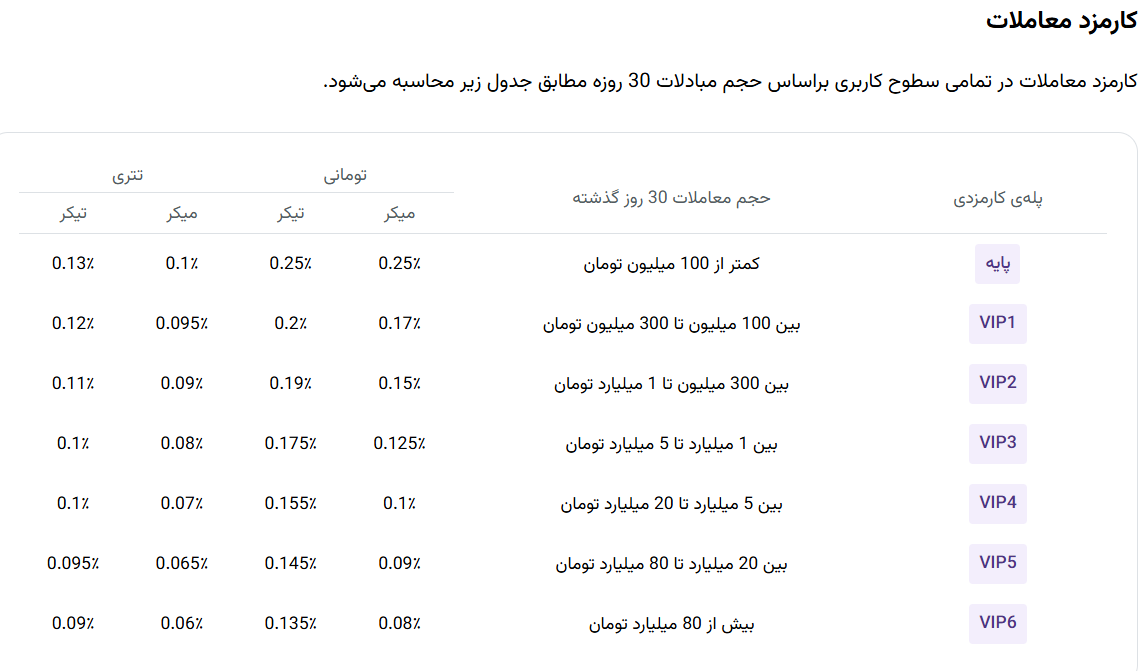
According to the latest information published by Nobitex, the trading fees on this exchange are as follows:
-
Toman Market:
-
For trading volumes less than 100 million Tomans: 0.25% for makers and takers.
-
As trading volume increases, the fee decreases to 0.08% for makers and 0.135% for takers at volumes above 80 billion Tomans.
-
Tether Market:
-
Base fee for volumes less than 100 million Tomans: 0.1% for makers and 0.13% for takers.
-
At higher trading tiers, maker fees decrease to 0.06% and taker fees to 0.09%.
-
Note: In trading, a “maker” refers to orders that do not match existing orders in the order book and help create market depth. “Takers” are orders that immediately match existing orders. Typically, maker fees are lower to encourage users to provide liquidity.
-
Deposit and Withdrawal Fees
-
Toman Deposit: Completely free on Nobitex.
-
Toman Withdrawal: Based on new information, the withdrawal fee is calculated as 0.02% with a minimum of 1,000 Tomans and a maximum of 10,000 Tomans per 100 million Tomans.
-
Cryptocurrency Deposit: Depositing all types of cryptocurrencies to a Nobitex wallet is free.
-
Cryptocurrency Withdrawal: Cryptocurrency withdrawal fees vary depending on the type of currency and the chosen network. For example, withdrawing Bitcoin from the BTC network incurs a fee of 0.00005 BTC.
Wallex: Competitive Structure with Special Discounts
Wallex also has a tiered fee structure, but by offering special discounts and the possibility of trading with lower fees for all users, it has managed to attract traders’ attention.
- Trading Fees
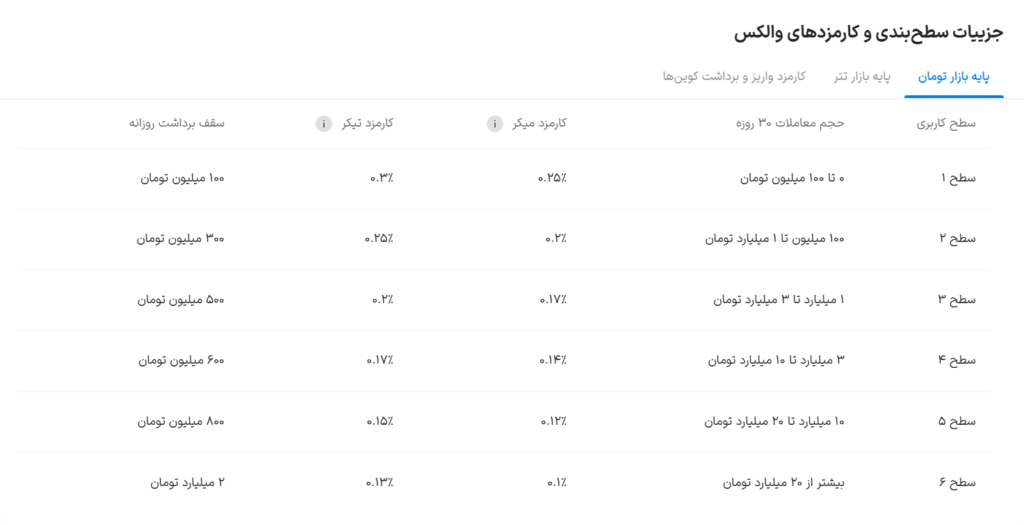
According to information published by Wallex, the trading fees on this exchange are as follows:
- Toman Market:
- Tier 1 (0 to 100 million Tomans): 0.25%
- Tier 2 (100 million to 1 billion Tomans): 0.2%
- Tier 3 (1 billion to 3 billion Tomans): 0.17%
- Tier 4 (3 billion to 10 billion Tomans): 0.14%
- Tier 5 (10 billion to 20 billion Tomans): 0.12% for makers, 0.15% for takers
- Tier 6 (More than 20 billion Tomans): 0.1% for makers, 0.13% for takers
Tether Market:
-
Tier 1 (0 to 20,000 USDT): 0.2%
-
Tier 2 (20,000 to 200,000 USDT): 0.15% for makers, 0.17% for takers
-
Special Note: Wallex occasionally offers special trading opportunities where all users, regardless of their trading tier, can trade with a 0.1% fee. These discounts are usually active for a limited time (e.g., 30 days) and are considered a great opportunity to reduce trading costs.
-
Deposit and Withdrawal Fees
-
Toman Deposit: A 0.02% fee is deducted through the payment gateway (up to 4,000 Tomans). For deposits over 25 million Tomans with an identifier, the fee is 0.01%.
-
Toman Withdrawal: The withdrawal fee is calculated as 0.01% per 100 million Tomans, up to a maximum of 4,000 Tomans.
-
Cryptocurrency Deposit: Depositing cryptocurrencies into a Wallex wallet is free (any deducted cost is related to network fees).
-
Cryptocurrency Withdrawal: Cryptocurrency withdrawal fees are variable and depend on the type of currency and the chosen network.
Comparison Table: Transaction Fees and Deposit/Withdrawal Charges on Nobitex vs. Wallex Exchanges
| Fee Type | Value (Nobitex | Wallex) | Description |
|---|---|---|
| Max Trading Fee (Toman) | Nobitex: 0.25% | Wallex: 0.35% | Base rate for low-volume traders |
| Min Trading Fee (Toman) | Nobitex: 0.08% (Maker) | Wallex: 0.1% (Maker) | For very high-volume traders (market makers) |
| Max Trading Fee (USDT) | Nobitex: 0.13% (Taker) | Wallex: 0.2% | Base rate in the USDT market for instant orders |
| Min Trading Fee (USDT) | Nobitex: 0.06% (Maker) | Wallex: 0.13% (Maker) | Lowest rate for makers at high trading levels |
| Toman Deposit | Nobitex: Free | Wallex: 0.02% (up to 4000 Toman) | Fee for topping up Toman balance via bank gateway |
| Toman Withdrawal | Nobitex: 0.02% (min 1000, max 10000 Toman) | Wallex: 0.01% (up to 4000 Toman) | Fee for transferring Toman to a bank account |
| Cryptocurrency Deposit | Nobitex: Free | Wallex: Free | Cost of depositing cryptocurrency (network fees calculated separately) |
| Special Discounts | Nobitex: Tiered reduction based on volume | Wallex: Tiered reduction + temporary campaigns with 0.1% fee | Wallex occasionally offers temporary discounts for all users |
Summary and Selection Guide
- If you are a very high-volume trader and can reach the higher trading tiers (above 80 billion Tomans), Nobitex is a more cost-effective option with maker fees of 0.08% in the Toman market and 0.06% in the Tether market.
- If you are a retail or novice trader, Wallex, with its special discount campaigns (like the 0.1% fee for all users), can significantly reduce your costs.
- Regarding Toman deposits and withdrawals, Nobitex offers free deposits, which is an advantage for frequent deposits. Wallex, however, charges a lower withdrawal fee (0.01% compared to 0.02%).
- Ultimately, if you are looking for flexibility and the use of temporary discounts, Wallex is a more attractive option. If transparency and a stable structure are your priorities, Nobitex would be a more suitable choice.
Speed of Settlement and Order Execution
The technical infrastructure of an exchange and the speed at which orders are executed have a direct impact on the trading experience, especially in highly volatile markets. Both Nobitex and Wallex, using modern architecture and strong technical teams, have aimed to deliver a fast and stable trading experience.
Nobitex: Fast Onboarding and Quick Trades
As the oldest exchange in Iran, Nobitex has consistently focused on improving the platform’s speed and efficiency. Its technical features include:
- Fast Start to Trading:
Nobitex claims that users can execute their first trade only five minutes after registration. This speed in identity verification and account activation is a valuable advantage for users who want to enter the market quickly.
- High Transaction Speed:
The exchange uses strong technical infrastructure that enables fast and seamless transactions. This is crucial for traders who need instant order execution.
- Performance During Volatility:
Nobitex has shown acceptable performance during highly volatile market conditions and peak traffic moments. Like most centralized platforms, it may occasionally experience heavy load, but the technical team continuously optimizes the infrastructure to maintain service stability.
- Secure Storage:
The majority of users’ assets are stored in offline (cold) wallets that are resistant to cyberattacks. While this is not directly related to transaction speed, it reflects technical maturity and focus on infrastructure security.
Wallex: Modern Architecture and Low Latency
Wallex, supported by a technical team composed of graduates from Sharif University of Technology and the University of Tehran, has designed a modern and efficient infrastructure. Its technical features include:
- Very Low Latency:
Thanks to its optimized system architecture, Wallex offers extremely low order-execution latency. This provides a serious advantage for traders using high‑speed strategies.
- Professional Trading Bot:
One of Wallex’s notable technical innovations is its free trading bot, capable of automatically executing strategies such as Martingale, Spot Grid, and Margin Grid. These bots operate with low fees (0.1% in the Toman market and 0.05% in the Tether market) and help traders capitalize on market opportunities without being constantly online.
- Stability During Crises:
Like Nobitex, Wallex has shown solid performance during periods of intense market volatility. Its modern architecture enables it to handle high order volumes efficiently.
- Dedicated Wallet:
Wallex provides a secure, integrated wallet that supports holding, depositing, and withdrawing both cryptocurrencies and Rial. This reduces the need for frequent asset transfers between wallets and the exchange, resulting in a smoother user experience.
Technical Infrastructure & Speed Comparison
| Criterion | Value (Nobitex | Wallex) | Description |
|---|---|---|
| Time to Start Trading After Registration | Nobitex: About 5 minutes | Wallex: Depends on KYC completion speed | Nobitex offers a quick KYC process; Wallex processing time depends on how fast documents are submitted. |
| Transaction Execution Speed | Nobitex: Fast | Wallex: Fast | Both exchanges offer suitable speed for executing trades. |
| Latency | Nobitex: Suitable for regular trading | Wallex: Very low (ideal for automated high-speed trading) | Wallex benefits from a modern architecture that provides lower latency, making it better for algorithmic trading. |
| Technical Innovations | Nobitex: Futures trading, staking, yield farming | Wallex: Free trading bot, trading platforms | Nobitex provides diverse investment tools; Wallex enables automated trading with a free bot. |
| Performance in Volatile Conditions | Nobitex: Acceptable | Wallex: Acceptable | Both exchanges maintain stable, acceptable performance during high market volatility. |
Summary and Selection Guide
If you are looking for a fast start to trading and a simple user experience, Nobitex, with its quick registration process and user‑friendly interface, can be a suitable choice.
If you are a professional trader using automated or algorithmic strategies, Wallex, with its low latency and advanced trading bot, provides more appropriate tools.
Both exchanges perform reliably during volatile market conditions, and their technical infrastructure meets the needs of a wide range of users.
In the past six years, both platforms have faced various technical challenges, but through continuous infrastructure updates and transparent communication, they have managed to maintain user trust.
Security and Identity Verification (KYC)
Nobitex:
In November 2023 (Aban 1402), Nobitex was the target of a cyberattack. A hacking group called “Gonjeshke Darande” (Predatory Sparrow) launched a politically motivated attack and destroyed around 90 million dollars’ worth of assets.
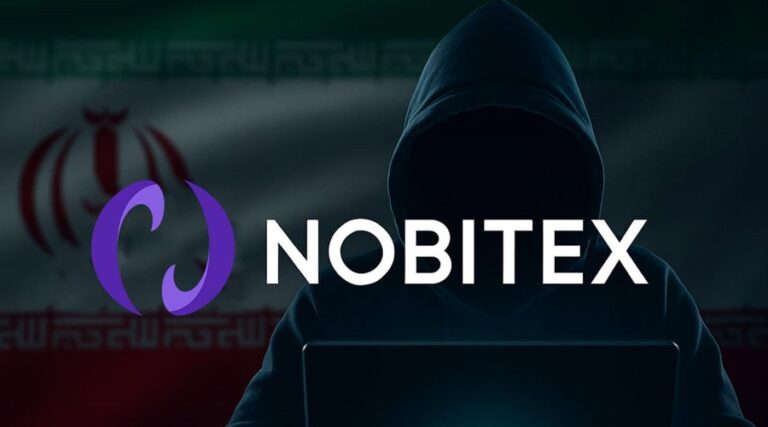
Important note: This attack was not a theft. The attackers burned the assets—making them permanently inaccessible—to send a political message. The group claimed Nobitex had financially supported Iranian military institutions.
Compensation by Nobitex:
Immediately after confirming the attack, Nobitex announced it would fully compensate users from its own reserves. Withdrawals eventually returned to normal, and users did not suffer financial losses.
Wallex:
To date, Wallex has reported no hacking incidents or security breaches.
Shared Security Measures
Both exchanges use standard security practices:
- Keeping the majority of assets in offline (cold) wallets
- Using secure banking gateways
- Two-factor authentication (2FA)
Identity Verification (KYC)
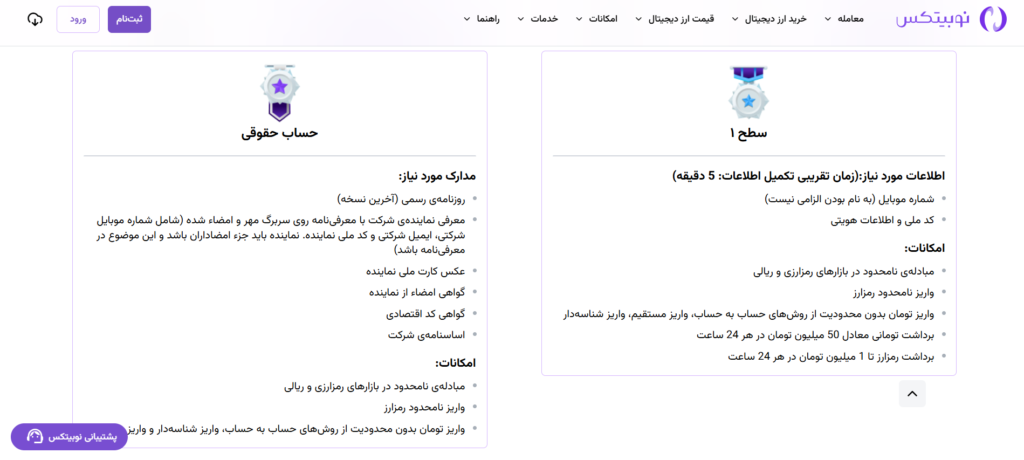
KYC is mandatory on both platforms. To use services, you must complete identity and banking information. Verification is fully online and relatively fast on both exchanges.
Customer Support
Nobitex, with its longer history, offers a broader support system including live chat, tickets, and phone support, claiming 24/7 responsiveness. Wallex also provides active and responsive customer support and aims for quick problem resolution. Both perform well, but Nobitex—with its larger support team—may be more responsive during peak hours.
User Interface and User Experience (UI/UX)
UI and UX play a crucial role in attracting and retaining users. Good design can make the difference between a profitable trade and a missed opportunity. This section will examine the platform and mobile app design of Nobitex and Wallex.
Nobitex: Simplicity for Beginner Users
Nobitex has consistently emphasized simplicity and user‑friendliness in its interface. This approach has made Nobitex an ideal choice for individuals who are new to the world of cryptocurrencies.
Platform Design
-
Simple and intuitive interface:
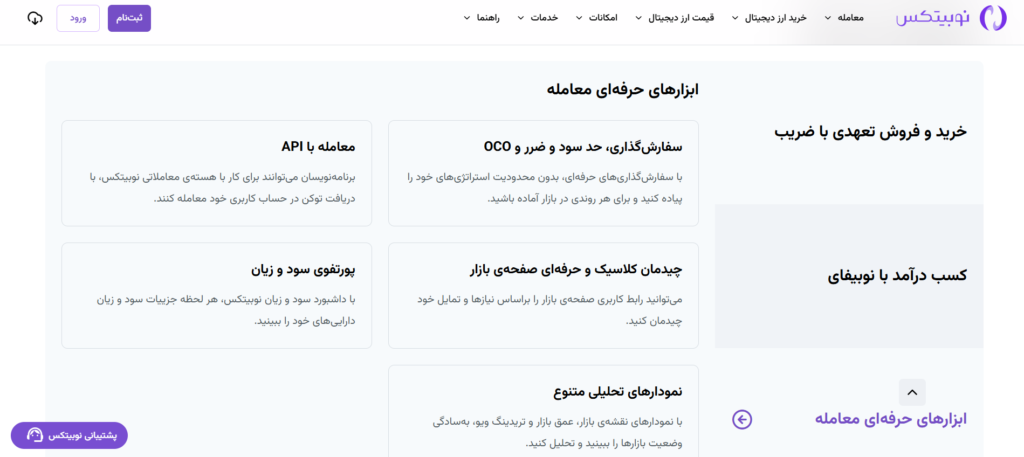
The main dashboard is designed with a clean layout and minimal complexity. Users can easily view prices, place buy or sell orders, and manage their balances.
-
Beginner‑friendly:
All tools and options are arranged in a way that prevents beginners from feeling overwhelmed. The Quick Buy feature is one example of this streamlined design.
-
Lack of advanced tools:
On the other hand, professional traders may find the absence of more sophisticated tools such as advanced conditional orders (like stop‑loss) or detailed analytical charts in the main panel somewhat limiting.
Nobitex Mobile App
-
Access everywhere:
The Nobitex mobile app is available for both Android and iOS, offering nearly all features of the web version.
-
Unified experience:
Users can buy and sell, trade futures‑style commitment contracts, stake assets, and use NobiFi services directly through the app. Nobitex claims this application—supported 24/7—is one of the fastest and best trading apps available.
-
Simple mobile UI:
The app, like the website, focuses on simplicity, enabling users to trade easily from anywhere.
Wallex: Modern Design with Professional Tools
Wallex, developed by a team of graduates from top Iranian universities, follows a different approach: a modern, minimalist design paired with advanced tools for traders.
Platform Design
-
Modern look inspired by Binance:
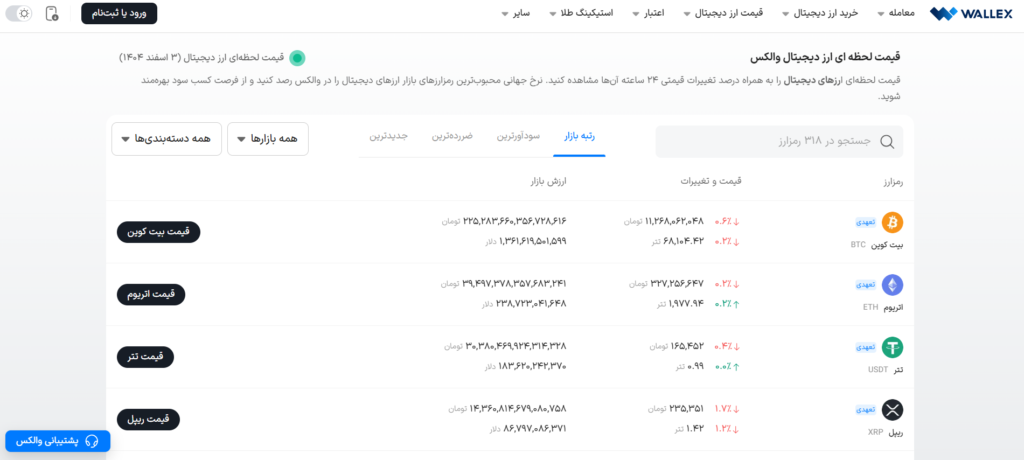
The Wallex interface closely resembles Binance’s mobile app. For users familiar with international exchanges, this is a significant advantage, as the environment feels instantly recognizable.
-
Potentially overwhelming for beginners:
Due to the abundance of trading tools, advanced charts, and multiple options, the trading page may feel busy or complex for new users. However, the menus and tabs are structured in a way that becomes easy to navigate after a short learning period.
-
Professional tools alongside simplicity:
Wallex provides features like stop‑limit orders, profit/loss reporting dashboards, price alerts, and analytical charts—essential tools for experienced traders.
Wallex Mobile App
-
Full feature parity with the web version:
The Wallex app for Android and iOS includes all major features of the website, such as deposits and withdrawals, quick trades, professional trading, and wallet management.
-
Fast identity verification:
Similar to Nobitex, users can register and complete KYC in under five minutes within the app.
-
Access to charts and tools:
Professional users can easily access price charts and analytical tools directly inside the app.
-
Built‑in live support:
One standout feature is the in‑app live chat support, which speeds up problem resolution significantly.
Summary Comparison of Design and Application
| Criterion | Value (Nobitex | Wallex) | Description |
|---|---|---|
| Design Approach | Nobitex: Simple, user-friendly, ease-oriented | Wallex: Modern, minimal, Binance-inspired | Nobitex is designed for general users, while Wallex offers a professional interface familiar to Binance traders. |
| Best Suited For | Nobitex: Beginners and casual investors | Wallex: Professional traders and active market participants | Nobitex’s simplicity makes it ideal for newcomers; Wallex targets professionals with its extensive features. |
| Advanced Features | Nobitex: Limited (No stop-loss) | Wallex: Full suite (Take profit/stop loss, advanced charts, price alerts) | Wallex provides analytical tools and risk‑management features; Nobitex focuses on simpler trading. |
| Mobile Application | Nobitex: Available for Android & iOS with all basic features | Wallex: Available for Android & iOS with all advanced features | Both apps are smooth and complete; Wallex also includes advanced functionalities in mobile. |
| Special Feature | Nobitex: Quick Buy for easy transactions | Wallex: In‑app live support chat | Nobitex’s Quick Buy simplifies trading for beginners; Wallex offers immediate access to customer support. |
Conclusion and Selection Guide
If you seek absolute simplicity and want to buy and sell cryptocurrency easily without encountering complex tools, Nobitex, with its simple and user‑friendly design, is the best option for you.
If you are a professional trader and require advanced analytical tools, the ability to set stop‑loss and take‑profit orders, and a familiar environment (similar to Binance), Wallex would be a more suitable choice.
Regarding mobile applications, both exchanges offer a smooth and comprehensive experience. The choice between them depends on whether you prioritize simplicity (Nobitex) or advanced features (Wallex).
Trading Tools and Features (Limit, Stop-loss, etc.)
Advanced trading tools define the primary difference between a simple exchange and a professional platform. For traders employing risk management strategies, the availability of orders such as Stop Loss and Take Profit is not an option but a necessity. In this section, we will conduct a detailed comparison of the trading capabilities of the two exchanges.
Wallex: Comprehensive Order Variety for Professional Risk Management
Wallex caters to the needs of professional traders by offering a full spectrum of advanced order types. The exchange provides users with the necessary tools to execute complex strategies.
Types of Orders Available on Wallex
Based on information published by Wallex, users of this exchange can utilize the following order types:
-
Limit Order: A buy or sell order at a specified price. The order is only executed when the market price reaches the level set by the user. This type of order is ideal for traders looking to buy or sell at an exact price.
-
Market Order: An order to buy or sell immediately at the best available price in the market. This order is used for quick entry into a trade or immediate exit from a position.
-
Stop Limit Order: A combination of a stop and a limit order. When the price reaches the stop level, a limit order is activated. This tool allows traders to have a more precise exit from a trade.
-
Stop Market Order: When the price reaches the set stop level, a market order is activated for selling. This is the fastest way to exit a trade in a declining market.
The Importance of Stop Loss on Wallex
Stop Loss is one of the most critical risk management tools in cryptocurrency trading. By offering this feature, Wallex helps its users to:
-
Prevent Large Losses: By setting a stop loss, a trader determines their maximum acceptable loss, thus preventing significant financial damage.
-
Reduce Emotional Decision-Making: Automatic exit from a trade when a certain price is reached prevents emotions from influencing decisions.
-
Control Risk in Volatile Markets: In a market where prices can change dramatically within minutes, a stop loss acts as a vital safeguard.
-
Avoid Liquidation: In leveraged trading, a stop loss can prevent the complete liquidation of capital.
Types of Stop Losses on Wallex
Wallex provides users with diverse options for setting stop losses:
-
Static Stop Loss: A stop loss set at a specific, unchanging price. Suitable for simple trades and beginner users.
-
Trailing Stop Loss: The stop loss automatically adjusts and moves with the price as it moves in a profitable direction. This tool is highly useful for locking in profits in trending markets.
-
ATR-Based Stop Loss: Utilizes the ATR (Average True Range) indicator to determine a logical stop loss distance appropriate for the market’s actual volatility.
Wallex Trading Bot
In addition to standard orders, Wallex offers a special innovation: a free trading bot. This bot enables the automated execution of strategies such as Martingale, Spot Grid, and Margin Grid. The Wallex bot operates with low fees (0.1% in Toman markets and 0.05% in Tether markets), allowing traders to capitalize on market opportunities without needing constant presence.
Nobitex: Limitations in Advanced Orders
As Iran’s longest-standing exchange, Nobitex focuses on simplicity and ease of use. This approach means that some advanced trading tools are not available on its platform.
Types of Orders Available on Nobitex
Based on reviews, Nobitex primarily supports basic order types:
-
Limit Order: Buy and sell at a specified price.
-
Market Order: Quick buy and sell at the current market price.
Lack of Stop Loss Orders
Nobitex’s most significant weakness compared to Wallex is the absence of direct support for stop loss orders. This means Nobitex users cannot set automatic stop losses for their trades and must manage their positions manually. In the volatile cryptocurrency market, this limitation can lead to substantial losses, as users may be unable to react quickly to price changes.
Nobitex: Alternative Services
Instead of focusing on advanced orders, Nobitex offers other services to its users:
- Leveraged Trading with Multiplier: The ability to profit from both bullish and bearish markets with a multiplier of up to 5x.
- Staking and Yield Farming: Earn crypto rewards for holding assets.
- Quick Buy (Quick Buy): Instantaneous buying and selling at market price for added simplicity.
- Participation Pool: Supplying liquidity for traders and sharing in profits.
While these services are beneficial for long‑term investment and passive income, they do not address the needs of day traders requiring risk management tools.
Trading Tools Summary Comparison Table
| Fee Title | Value (Nobitex | Wallex) | Description |
|---|---|---|
| Basic Order Types | Nobitex: Limit, Market | Wallex: Limit, Market | Both exchanges support basic order types. |
| Stop Loss Order | Nobitex: Not available | Wallex: Available (Fixed, Trailing, ATR-based) | Wallex allows for automatic stop-loss settings; Nobitex does not offer this feature directly to users. |
| Stop Limit Order | Nobitex: Not available | Wallex: Available | Wallex supports combined orders for more precise risk management. |
| Stop Market Order | Nobitex: Not available | Wallex: Available | Wallex provides the ability to exit trades quickly by activating a market order. |
| Take Profit Order | Nobitex: Not available | Wallex: Available | Wallex offers automatic take-profit settings to lock in gains. |
| Automated Trading Bot | Nobitex: Not available | Wallex: Available (Free with Martingale, Spot Grid, and Margin Grid strategies) | Wallex, with its free bot, enables algorithmic trading for users. |
| Auxiliary Tools | Nobitex: Margin trading, Staking, Yield Farming | Wallex: Advanced charts, Price alerts, Profit & Loss reports | Nobitex focuses on investment tools, while Wallex offers analytical and alerting features. |
Conclusion: Which Exchange is Right for You?
If you are a technical and professional trader who requires risk management tools such as stop loss, take profit, and conditional orders, Wallex is an unparalleled choice. The variety of order types and the ability to use the trading bot make Wallex an ideal option for active traders.
If you are a beginner or long‑term investor who simply wants to buy and hold major cryptocurrencies and doesn’t need complex tools, Nobitex, with its simplicity, can meet your needs. However, you should be aware that in extreme volatility, the absence of an automatic stop loss can pose challenges.
Important Note: Stop loss is one of the most crucial risk management tools, and its absence on Nobitex is a significant drawback for traders. If you intend to trade actively, be sure to consider this point when making your decision.
Rial Deposit and Withdrawal Methods
The Rial deposit and withdrawal process, acting as the bridge between the banking system and the cryptocurrency market, is a primary concern for users. The speed, fees, and variety of deposit and withdrawal methods can directly impact the user experience. In this section, we will conduct a detailed review of the Rial deposit and withdrawal methods on both Nobitex and Wallex.
Nobitex: Diverse Deposits and Tiered Withdrawals
As Iran’s oldest exchange, Nobitex offers various methods for Rial deposits and withdrawals.
Rial Deposit Methods on Nobitex
Based on information published by Nobitex, users can utilize four different methods for Rial deposits:
-
Speedy Deposit: With a fee of 0.02% of the deposit amount. This is the fastest way to fund an account.
-
Identified Deposit (Shenasedar): With a fee of 0.01% of the deposit amount. In this method, users deposit funds via the Paya or Satna system using a specific identifier.
-
Account to Account Deposit: With a fee of 0.01% of the deposit amount.
-
Direct Deposit: With a fee of 0.20% of the deposit amount.
Rial deposits on Nobitex are typically instant, and users see the balance reflected in their account immediately after the deposit.
Rial Withdrawal Fees and Timing on Nobitex
The Rial withdrawal fee on Nobitex is calculated as 0.02%, with a minimum of 1,000 Tomans and a maximum of 10,000 Tomans per 100 million Tomans withdrawn. For example, if the withdrawal amount is 100 million Tomans, the fee would be 10,000 Tomans.
The time for the funds to arrive in the bank account on Nobitex depends on the Paya settlement cycles.
Rial withdrawals are typically completed within a few minutes to a few hours, depending on the banking network’s load.
Wallex: Maximum Variety in Deposit Methods
Wallex aims to cover the diverse needs of its users by offering four distinct methods for Rial deposits. The exchange has published a comprehensive visual tutorial of these methods on its official blog.
Rial Deposit Methods on Wallex
- Deposit with Identifier (Shenaseh):
This method is designed for deposits without using a payment gateway. Users can deposit funds through their banking applications by creating a deposit identifier (which is their national ID).
- Fee: 0.01% of the deposit amount.
- Restriction: Deposits are only permitted from accounts registered with Wallex.
- Duration: Dependent on Paya settlement cycles.
- Card-to-Card Deposit:
Suitable for immediate deposits with medium amounts.
- Fee: No fee (only bank fees apply).
- Deposit Limit: 10 million Tomans per 24 hours.
- Duration: 5 to 10 minutes.
- Deposit to Deposit (Bank Branch):
Suitable for immediate deposits of large amounts. In this method, the originating and destination banks must be the same (currently Parsian Bank).
- Fee: No fee.
- Deposit Limit: No limit.
- Duration: Maximum 10 minutes.
- Direct Payment:
A fully automated method where deposits are processed instantly after activation.
- Fee: 0.02% (up to a maximum of 4,000 Tomans).
- Deposit Limit: 25 million Tomans.
- Duration: Instant.
- Active Banks: Currently Agricultural Bank.
Rial Withdrawal Fees and Timing on Wallex
The Rial withdrawal fee on Wallex is calculated as 0.01% of the withdrawn amount per 100 million Tomans, with a maximum fee of 4,000 Tomans.
The withdrawal schedule on Wallex, similar to Nobitex, is determined by Paya settlement cycles.
Compliance with Central Bank Regulations
One of the crucial points in choosing an exchange is its compliance with the latest directives from the Central Bank. Both Nobitex and Wallex are striving to adhere to legal requirements and are taking steps towards obtaining official licenses. Although the Central Bank has not yet announced an official list of authorized exchanges, both platforms are considered strong candidates for receiving a license.
The identity verification process is mandatory on both exchanges. Users must complete their identity documentation to deposit and withdraw Rial. This measure contributes to financial transparency and the prevention of money laundering.
| Fee Title | Amount (Nobitex | Wallex) | Description |
|---|---|---|
| Toman Deposit (Methods) | Nobitex: Shetabi, Identifier, Account to Account, Direct | Wallex: Identifier, Card to Card, Deposit to Deposit, Direct Payment | Wallex has more variety in instant deposit methods (Card to Card and Deposit to Deposit). |
| Toman Deposit Fee | Nobitex: 0.02% to 0.01% (depending on method) | Wallex: 0.02% to 0.01% (up to 4000 Toman) | Both exchanges have competitive fees; Wallex does not charge extra fees for Card to Card and Deposit to Deposit methods. |
| Toman Withdrawal Fee | Nobitex: 0.02% (min 1000, max 10000 Toman) | Wallex: 0.01% (up to 4000 Toman) | Wallex charges a lower withdrawal fee. |
| Deposit Time | Nobitex: Instant (for Shetabi deposits) | Wallex: Instant to 10 minutes (for instant methods) | Wallex offers more diverse instant options with Card to Card and Deposit to Deposit methods. |
| Withdrawal Time | Nobitex: Dependent on Paya cycle (few minutes to several hours) | Wallex: Dependent on Paya cycle (few minutes to several hours) | Both exchanges use the Paya system, and withdrawal times are similar. |
| Crypto Deposit | Nobitex: Free | Wallex: Free | Crypto deposits are free on both exchanges; only network fees apply. |
| Compliance with Regulations | Nobitex: In the process of obtaining a license from the Central Bank, identity verification required | Wallex: In the process of obtaining a license from the Central Bank, identity verification required | Both exchanges comply with Central Bank requirements and financial transparency. |
Conclusion and Selection Guide
If you are looking for variety in instant deposit methods and want to top up your account quickly and without additional fees, Wallex is a better option with its card-to-card and deposit-to-deposit methods.
If you have frequent, small deposits, Nobitex with its speedy deposit and 0.02% fee is a suitable choice.
In terms of withdrawal fees, Wallex, at 0.01% (up to 4,000 Tomans), is more cost-effective than Nobitex (0.02% up to 10,000 Tomans).
Both exchanges have similar withdrawal timelines, both dependent on Paya settlement cycles.
Ultimately, both platforms provide the necessary security and transparency for users by adhering to Central Bank requirements and mandatory identity verification.
Network Fees and Costs
Network Fee is a fundamental concept in the blockchain world, which every user must pay to transfer their digital assets. These fees go directly to the blockchain network, and exchanges merely act as intermediaries. In this section, we will examine the concept of network fees and how they are calculated on Nobitex and Wallex.
What is a Blockchain Network Fee and Why is it Paid?
A network fee is the cost users pay to have their transactions confirmed on blockchain networks. These fees are paid to miners (in Proof-of-Work networks) or validators (in Proof-of-Stake networks) and play a vital role in the security and stability of blockchain networks.
Reasons for Network Fees:
- Incentivizing Miners and Validators: Miners confirm transactions and record them in blocks by expending energy and computational power. Fees serve as an incentive for them to continue this crucial activity.
- Transaction Prioritization: During network congestion, transactions with higher fees are processed faster by miners.
- Preventing Spam Attacks: The existence of fees prevents the network from being flooded with a high volume of malicious and meaningless transactions.
Transparency in Fee Presentation on Nobitex and Wallex
Both Nobitex and Wallex publish a comprehensive list of their cryptocurrency withdrawal fees based on different networks on their websites. This transparency allows users to be aware of the exact cost before making a transfer.
Nobitex
On its official fees page, Nobitex provides a complete table of cryptocurrency withdrawal fees based on various networks. For example:
| Fee Title | Amount (Nobitex | Wallex) | Description |
|---|---|---|
| Bitcoin (BTC) | Nobitex: BTC, BEP20, Lightning networks / Sample Fee: 0.00005 BTC (BTC Network) | Wallex: Similar information (refer to website) | Bitcoin withdrawal fees depend on the selected network. The BTC network has the lowest fee. |
| Ethereum (ETH) | Nobitex: ERC20, Arbitrum One, BEP20, BASE networks / Sample Fee: 0.0004 ETH (ERC20 Network) | Wallex: Similar information | Ethereum withdrawal fees are highest on the ERC20 network; Layer 2 networks like Arbitrum are more cost-effective. |
| Tether (USDT) | Nobitex: ERC20, TRC20, BEP20, Arbitrum One networks / Sample Fee: Variable (See website) | Wallex: Similar information | Tether fees are highly network-dependent; TRC20 and BEP20 networks typically have the lowest costs. |
| Binance Coin (BNB) | Nobitex: BEP20 (BSC) Network / Sample Fee: 0.001 BNB | Wallex: Similar information | BNB is mainly transferable on the Binance Smart Chain (BEP20) network, with a fixed and low fee. |
Important Note: Some networks may be temporarily suspended for technical reasons, which will be indicated as “Suspended” on the Nobitex website.
Wallex
Wallex also publishes precise information about network fees and their calculation methods on its official blog and help pages. Furthermore, in its educational sections, it compares the fees of different networks for widely used cryptocurrencies like Tether.
Wallex’s Recommendation to Users: For precise information on withdrawal fees for each cryptocurrency and the minimum withdrawal amount, please refer to the official Wallex website and the fees page.
Comparison of Network Fees for Tether (USDT)
Tether, as the most popular stablecoin, can be transferred across various networks. Choosing the appropriate network can significantly impact the cost and speed of the transfer.
| Feature | Amount (ERC20 | TRC20 | BEP20) | Description |
|---|---|---|
| Address Model | ERC20: Starts with “0x” | TRC20: Starts with “T” | BEP20: Starts with “0x” | ERC20 and BEP20 networks both use similar addresses (0x), but the TRC20 network has addresses starting with T. |
| Approximate Fee | ERC20: $0.8 to $25 | TRC20: $0.95 to $1.93 | BEP20: $0.1 to $0.5 | The BEP20 network has the lowest fees, while ERC20 can become very expensive due to congestion. |
| Transfer Speed | ERC20: 2 to 10 minutes | TRC20: About 1 minute | BEP20: About 1 minute | TRC20 and BEP20 networks are fast, while ERC20 may slow down during peak times. |
| Security | ERC20: Very High | TRC20: Medium | BEP20: High | The Ethereum network (ERC20) is considered the most secure due to its age and high decentralization. |
| Recommended Use Case | ERC20: Very large amounts | TRC20: Small to medium amounts | BEP20: Medium to large amounts | For large transfers, ERC20’s security is preferred; for low cost and speed, BEP20 or TRC20 are more suitable. |
| Exchange Support | ERC20: Almost all exchanges | TRC20: Most reputable exchanges | BEP20: Growing | All three networks are supported on Nobitex and Wallex, but ensure the destination exchange supports the network before transferring. |
Conclusion for Users: Considering the costs, TRC20 and BEP20 networks are more cost-effective for everyday transactions and medium amounts, while the ERC20 network, due to its higher security, is more suitable for large-volume transfers.
Factors Affecting Network Fee Amount
Several factors cause fluctuations in blockchain network fees:
- Network Traffic (Congestion): The more pending transactions there are, the greater the competition to be included in the next block, leading to higher fees.
- Transaction Volume: Transactions with more inputs or outputs (e.g., transfers from multiple different addresses) have a larger volume and require higher fees.
- Address Type: Using newer address types like SegWit (in Bitcoin) can reduce transaction size and result in lower fees.
- Market Behavior: An increase in the price of cryptocurrencies is usually accompanied by increased network activity and, consequently, higher fees.
Summary and Practical Tips
- Depositing cryptocurrencies is free on both exchanges. Users only pay the network fee to transfer to the exchange’s address.
- Cryptocurrency withdrawal fees are determined by the exchange and are deducted from the user as a fixed amount of the same cryptocurrency (e.g., 0.00005 Bitcoin).
- Always check the destination network before transferring. Sending USDT on ERC20 to an address designed for TRC20 can lead to the loss of assets.
- During network congestion, a higher fee will result in faster transaction confirmation. If you are not in a hurry, you can send your transaction with a lower fee, but the confirmation time may be longer.
- For the most up-to-date fee information, visit the official pages of Nobitex and Wallex, as these values may be updated based on network conditions and exchange policies.
Both exchanges have strived to meet diverse user needs and provide a secure and cost-effective experience by transparently presenting fee information and supporting various networks.
Brand History and Reputation
Nobitex Reputation:
As Iran’s oldest cryptocurrency exchange, Nobitex began its operations in 2017 and has become an industry giant by attracting over 10 million users. The exchange is recognized as a knowledge-based company and is a member of the New Technologies Association (Fintech), which adds to its credibility.
Wallex Reputation and “Pump” Program:
Founded in 2018 by graduates of Sharif University of Technology and Tehran University, Wallex quickly gained the trust of the Iranian crypto community. With over 5 million users, the exchange is known as one of the most innovative Iranian platforms.
Wallex’s “Pump” Program:
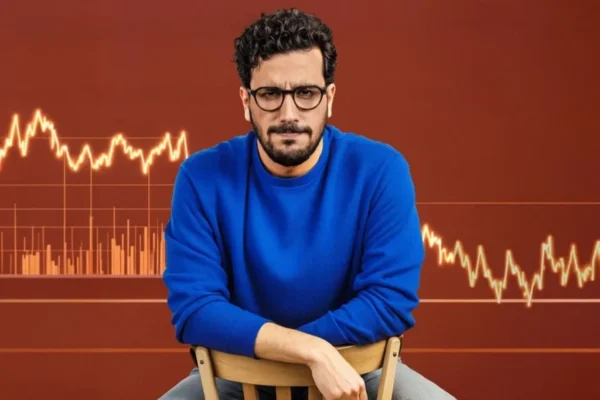
One of Wallex’s most creative initiatives to build trust and increase user engagement was the launch of the “Pump” program, hosted by Amirhossein Ghiasi.
Insurance or Asset Protection Conditions
In Iranian centralized exchanges, the concept of insurance, in the common global market sense, is less prevalent. However, both exchanges protect user assets by relying on their history and reputation, employing technical solutions like cold wallets. To date, no reports of user asset loss due to security breaches on these two platforms have been published.
API and Developer Support
For algorithmic traders and those who use trading bots, API is an essential requirement. Both exchanges offer robust API services. Wallex even provides this capability for ordinary users by offering a free trading bot within its platform. This is a significant advantage for those seeking automated trading without programming knowledge.
OTC Transactions and Over-the-Counter Markets
OTC (Over-the-Counter) markets, or instant buying and selling, are designed for fast, high-volume transactions. Both exchanges provide this facility. Nobitex and Wallex both have an “Instant Buy/Sell” section where users can quickly purchase their desired cryptocurrency at the best available market price. This section is particularly useful for beginners who are not familiar with market depth.
Exchange Limitations and Regulations
The most significant limitation on both exchanges is the mandatory identity verification. Additionally, to comply with anti-money laundering laws, both platforms may freeze user accounts and request explanations if suspicious transactions are detected. In terms of trading regulations, Wallex has its own risk management rules due to offering leveraged trading (margin trading). Nobitex also provides “Margin Trading” with its own specific mechanism.
Order Book Depth (Liquidity)
As mentioned in the first section, Nobitex, due to its larger user base, has better order book depth. This means the price difference between buy and sell orders (spread) is generally lower on Nobitex. However, Wallex, with its intelligent liquidity management, especially in the Tether market, has managed to maintain a competitive spread close to Nobitex. For precise observation, you can compare the order books of both exchanges for the same cryptocurrency (e.g., Bitcoin).
Stablecoin Support
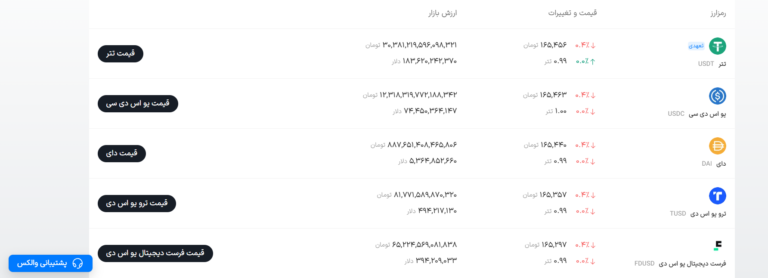
Stablecoins like Tether (USDT) and DAI play a vital role in trading. Both exchanges offer comprehensive support for Tether (across various networks). Nobitex also supports DAI. The variety of networks for USDT deposits and withdrawals (such as TRC20, ERC20, BEP20, etc.) on both platforms is high, allowing users to conduct their transactions with minimal fees.
Reporting and Transaction History
For professional users, and for calculating profit/loss and filing tax returns, having accurate transaction reports is essential. Both exchanges provide the ability to download trading history in Excel or CSV file formats. The user panel on both platforms offers users easy access to their deposit, withdrawal, and transaction records.
User Interface (Web/Mobile)
Finally, both exchanges offer a consistent user experience on both web and mobile applications. Nobitex’s application has a simpler design for beginners, while Wallex’s application attempts to implement all the features of the web version, including advanced charts and various order types, on mobile as well. The choice between the two depends on your preference and technical expertise.
Conclusion
The choice between Nobitex and Wallex depends on your needs and experience level:
Choose Nobitex if:
- You are looking for a more established, well-known exchange with higher liquidity.
- You are a new user and want a simple and smooth user interface.
- You intend to use various income-generating services like staking and yield farming.
- A larger user base and extensive support are important to you.
Choose Wallex if:
- You are a professional trader and need tools like stop-loss and conditional orders.
- A wide variety of cryptocurrencies is a priority for you.
- You want to use a free trading bot.
- You prefer to use a platform with more technical innovations.
Ultimately, both exchanges are among the best in Iran, and you can use their services with confidence. I suggest trying out their demo accounts (if available) to become more familiar with each platform’s environment.
Similar articles you need to read:
Introduction and Review of Tabdeal Exchange for Iranians
Introduction and Review of BingX Exchange for Iranians
Review and Analysis of Wallex Exchange for Iranians
Introduction and review of the Iranian exchange Bit24
Introduction and review of the Iranian exchange Exir
Introduction and review of the Iranian exchange Excoino
Introduction and review of the Iranian exchange Ramzinex
Introduction and review of the Iranian exchange Bitpin